

Gut Health for Dogs & Cats: What Every Pet Parent Should Know
Manan Chawla (Updated: Jun 29, 2026) 8 min read

Learn how the gut microbiome influences your pet's digestion, immunity, and overall health, plus practical tips for supporting gut health through diet, probiotics, and daily care.
Key Highlights
- The gut does more than digest food. It drives immunity, energy, mood, and nutrient absorption. When it's off, everything is off.
- Dogs and cats are not the same problem. Cats are obligate carnivores, a supplement or diet that works for your dog can actively harm your cat.
- The microbiome breaks down when disrupted. Antibiotics, stress, poor food quality, and sudden diet switches are the four biggesfrt triggers.
- Food is the highest-leverage tool. Real meat or fish first on the label, calibrated fiber, no common allergens. Format matters too, wet food is often the right call for cats.
- Probiotics work, but strain and species matter. Human probiotics don't work on pets. Start at half dose. Give it time.
Every year on September 21st, pet parents and veterinarians observe National Dog and Cat Gut Health Awareness Day. It is a day dedicated to reminding us that a healthy gut is more than just good digestion.
From boosting the immune system to enhancing energy, mood, and overall vitality, gut health plays a central role in keeping our pets happy and thriving. In this blog, you'll learn what gut health means for dogs and cats, common signs of digestive issues, and simple ways to support it through diet, supplements, and daily care.
What Is the Gut Microbiome
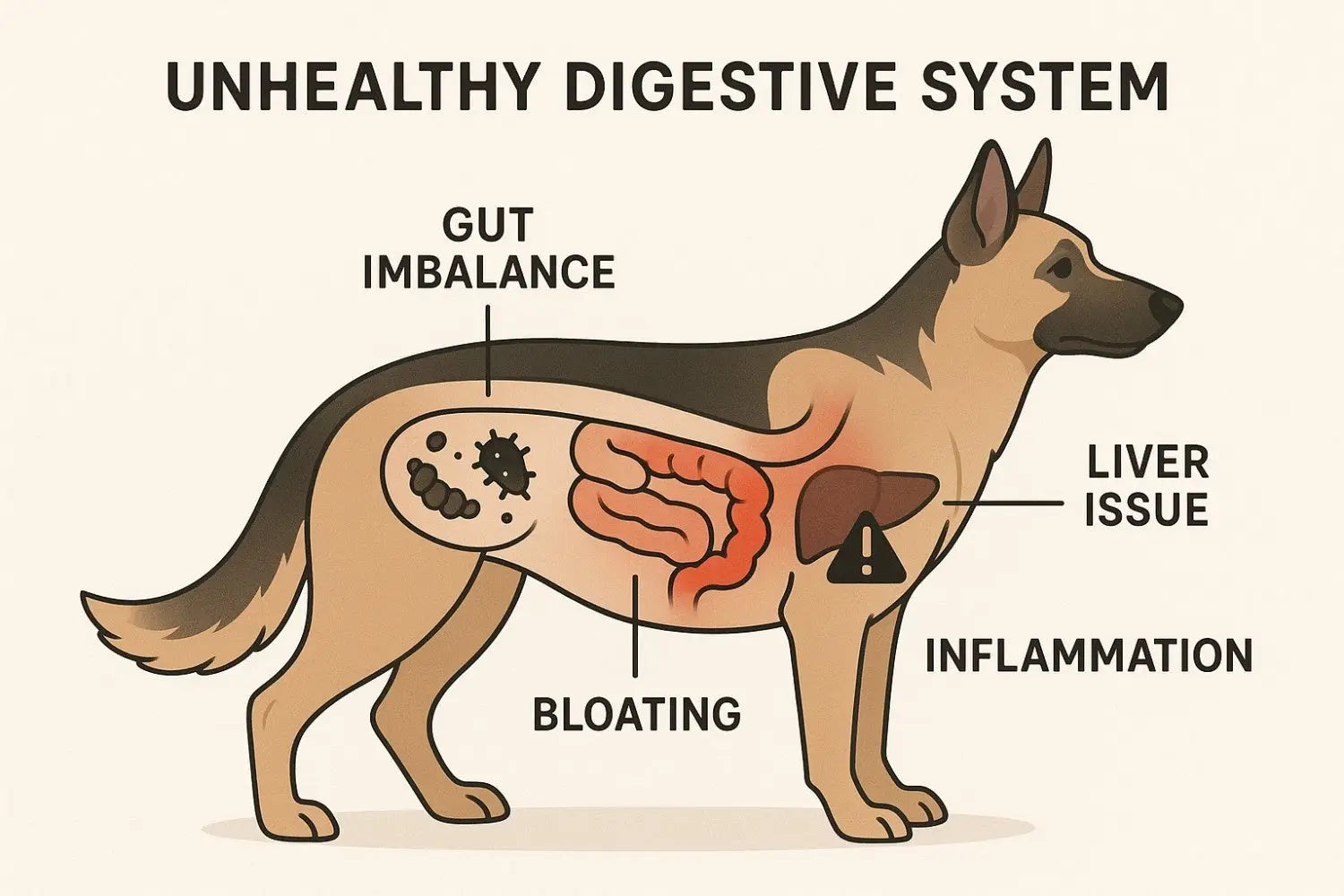
Inside your dog or cat’s digestive tract lives an entire community of bacteria and other tiny organisms, known as the microbiome. Don’t worry, these are the good guys. When the microbiome is balanced, it helps your pet break down food properly, absorb nutrients, fight off harmful bacteria, and build a stronger immune system. If the balance is disrupted by things like stress, antibiotics, poor-quality food, or a sudden change in diet, you may start noticing signs that your pet is not feeling their best.
Signs Your Pet’s Gut Might Need Some Help
We’ve all seen the occasional upset stomach, but ongoing gut issues are worth paying attention to. Some common red flags include:
- Diarrhea or constipation that doesn’t clear up.
- Frequent vomiting.
- Gas or bloating.
- Dull skin or coat.
- Sudden weight changes or loss of appetite.
- Low energy or irritability.
If you notice these symptoms sticking around, it could mean your pet’s gut microbiome needs extra support.
Dogs and cats are not the same gut problem
This matters more than most owners realize. Domestic cats are obligate carnivores that rely on high-protein diets, whereas dogs are metabolically omnivorous and can digest, absorb, and metabolize higher amounts of carbohydrates. A diet or supplement that works for your dog may actively harm your cat.
Key species differences:
- Cats can’t make taurine on their own and need it from meat.
- Dogs handle carbs better, while cats aren’t built for them.
- Dogs adjust more easily to diet changes, while cats are more sensitive.
- Cats need more moisture in their diet for proper digestion and hydration.


How Food Shapes Gut Health
Food is the number one way to support your pet’s digestion. Think of it as fuel for both your pet and the good bacteria in their belly. Here are a few tips:
- Pick high-quality proteins: Real meat or fish should be the first thing on the ingredient list, not a by-product blend or a grain.
- Add fiber and prebiotics: Pumpkin, sweet potato, chicory root, these feed the good bacteria and keep digestion moving.
- Try probiotics in food: Some premium diets already include them.
- Consider freeze-dried or raw diets: These are less processed and often easier on sensitive stomachs. HardyPaw carries a variety of freeze-dried options that are gentle and nutrient-rich.
- Go slow when switching foods: A gradual transition (7–10 days) helps avoid tummy trouble.
The foods silently wrecking your pet's gut
Beyond the well-known toxins (grapes, xylitol, onions), these common household foods cause GI damage that owners attribute to other causes:
- High-fat table scraps - a leading trigger for pancreatitis flares in dogs.
- Dairy in lactose-intolerant pets - most adult dogs and cats have limited lactase.
- Rich or spiced meats (deli meats, seasoned chicken) - disrupt gut flora.
- Bones from cooked meat - constipation risk and potential obstruction.
- Excessive treats - many treats are high-fat, disrupting an otherwise balanced diet.
Pet Food Formulated for Gut Health
Not all pet food marketed for "digestive health" is equal. The strongest formulas share specific characteristics: highly digestible proteins, calibrated prebiotic fiber, no common allergens, and AAFCO-complete nutrition. Below is what to look for and which HardyPaw products deliver.
Purina Pro Plan Sensitive Skin & Stomach Formula Salmon & Rice Formula Dry Dog Food
Purina Pro Plan All Life Stages Small Bites 27/17 Lamb & Rice Dry Dog Food, 37.5-lb


Top Digestive Health Supplements for Cats & Dogs
Supplements for Extra Support
Even with the right food, some pets benefit from a little extra help. Supplements can play an important role, especially if your cat or dog has been on antibiotics, is aging, or has a sensitive stomach.
- Probiotics restore the healthy bacteria that make digestion easier. Digestive enzymes give your pet’s body a boost in breaking down proteins, fats, and carbohydrates.
-
Prebiotics, on the other hand, act like fertilizer for the good bacteria, helping them thrive. HardyPaw offers safe, vet-approved digestive health supplements that can make this support simple and effective.


It is always best to check with your veterinarian before adding anything new to your pet’s routine.
Lifestyle Makes a Difference Too
What your pet eats matters, but so does how they live.
- Maintaining hydration is one of the easiest ways to keep digestion running smoothly.
- Regular exercise also plays a part by keeping metabolism steady and bowels moving as they should.
- Stress, whether from big life changes or even small daily shifts, can also impact digestion, so try to keep your pet’s routine as consistent as possible.
Important: Avoid known food irritants if your pet has sensitivities, and remember that regular vet checkups can detect issues before they turn into bigger problems.

How to Improve Gut Health in Pets with Sensitive Stomachs
Sensitive stomachs stem from multiple causes, such as food intolerance, low microbiome diversity, stress, or post-illness recovery. No single fix works. The framework below addresses the most impactful factors in sequence.
The sensitive stomach framework:
- Start a probiotic at half dose. Full dose too soon causes gas and makes owners quit early. Build up after the first week.
- Add fiber in week 2-3. Plain canned pumpkin works - 1 tsp per 10 lbs daily. Don't add it before the probiotic has settled.
- Feed twice a day, same times, every day. Free-feeding keeps the gut constantly working and masks early appetite changes.
- Stress hits the gut physically. Keep the routine predictable, use Feliway or Adaptil if needed, and keep dogs moving daily.
- Cut gut disruptors. Table scraps, rawhide, artificial-dye treats, and dairy all aggravate sensitive GI systems.
- Rule out parasites before adding supplements. A fecal exam can identify Giardia or worms, which cause symptoms identical to those of food sensitivity. Deworming first saves months of misdirected effort.
If symptoms persist after 4 consistent weeks: The issue warrants a vet workup, not more supplements. IBD, EPI, and food-responsive enteropathy require professional diagnosis.

Purina Pro Plan Sensitive Skin & Stomach Small Breed Salmon & Rice Formula Dry Dog Food, 16-lb

Purina Pro Plan High Protein Sensitive Skin & Stomach Lamb & Rice Formula Dry Cat Food

The difference between "sensitive stomach" and "prescription digestive" food:
Sensitive stomach foods (Purina Pro Plan Sensitive, Hill's Science Diet Sensitive) are available over the counter and are suitable for mild, recurring GI upset. Prescription digestive diets (Hill's i/d, Royal Canin GI) are veterinary-grade, clinically tested, and intended for pets diagnosed with specific GI conditions.
Conclusion
Your pet’s gut health is about so much more than avoiding tummy trouble. It is the foundation for their energy, immunity, and overall happiness. On this Gut Health Awareness Day, take a moment to check in. Are you feeding quality food? Could your furry friend use a little probiotic support? Are they drinking enough water and getting regular exercise?
And don’t forget, if your cat or dog is dealing with chronic diarrhea, repeated vomiting, or sudden weight loss, it’s time to call your vet. Some problems need medical attention, and catching them early is always best. The good news is that with the right diet, a few smart supplements, and a healthy routine, you can keep your pet’s belly and the rest of their body feeling great.
Frequently Asked Questions
Q1: How can I tell if my dog or cat has poor gut health?
Ans: Common signs include frequent diarrhea, constipation, vomiting, bloating, or too much gas. You may also see changes in appetite, weight going up or down, a dull coat, or low energy. If these signs don’t go away, it’s best to check in with your vet so you can catch and fix the issue early.
Q2: What foods are best for supporting pet gut health?
Ans: High-quality proteins, fiber-rich ingredients like pumpkin or sweet potato, and foods that include probiotics are excellent for digestion. Many pet parents also find that freeze-dried or raw diets, such as those available at HardyPaw, are easier on sensitive stomachs.
Q3: Can probiotics really help dogs and cats?
Ans: Yes. Probiotics help add good bacteria to your pet’s gut and keep things in balance. That usually means easier digestion, fewer tummy troubles, and a stronger immune system over time. Go for vet-approved options, and it’s always a good idea to talk to your vet before starting anything new.
Q4: How does hydration affect gut health in pets?
Ans: Water is essential for healthy digestion. It helps move food through the intestines, prevents constipation, and supports nutrient absorption. Make sure your pet has access to fresh, clean water at all times.
Q5: When should I take my pet to the vet for digestive issues?
Ans: Loose stools happen. Vomiting happens. But when it keeps happening, chronic diarrhea, weekly vomiting, blood in the stool, weight dropping for no clear reason, a dog who just stopped being a dog that's your cue to call the vet. Don't wait to see if it passes.
Related Articles


Recent Articles

