

Hoof Care for Horses: Preventing Cracked Hooves, Infections, and Common Hoof Diseases
Palvi 7 min read

Horse limping, hoof cracked, or just not quite right in the feet? It's usually one of a handful of causes, and most are fixable with the right daily habits.
Key Takeaways
There's an old saying: no hoof, no horse. Every horse owner should know the cliché because a horse's full body weight rides on four feet, and those feet absorb the shock of every stride. Mess with that system and the trouble travels upward into the legs and joints. That's why caring for good hoof health has become one of the most important parts of keeping a horse sound, comfortable, and able to do its job.
This guide walks through the basics of maintaining a horse's hooves, common problems to watch for, and how nutrition supports healthy hooves from the inside out.
Understanding Horse Hoof Parts for Better Care
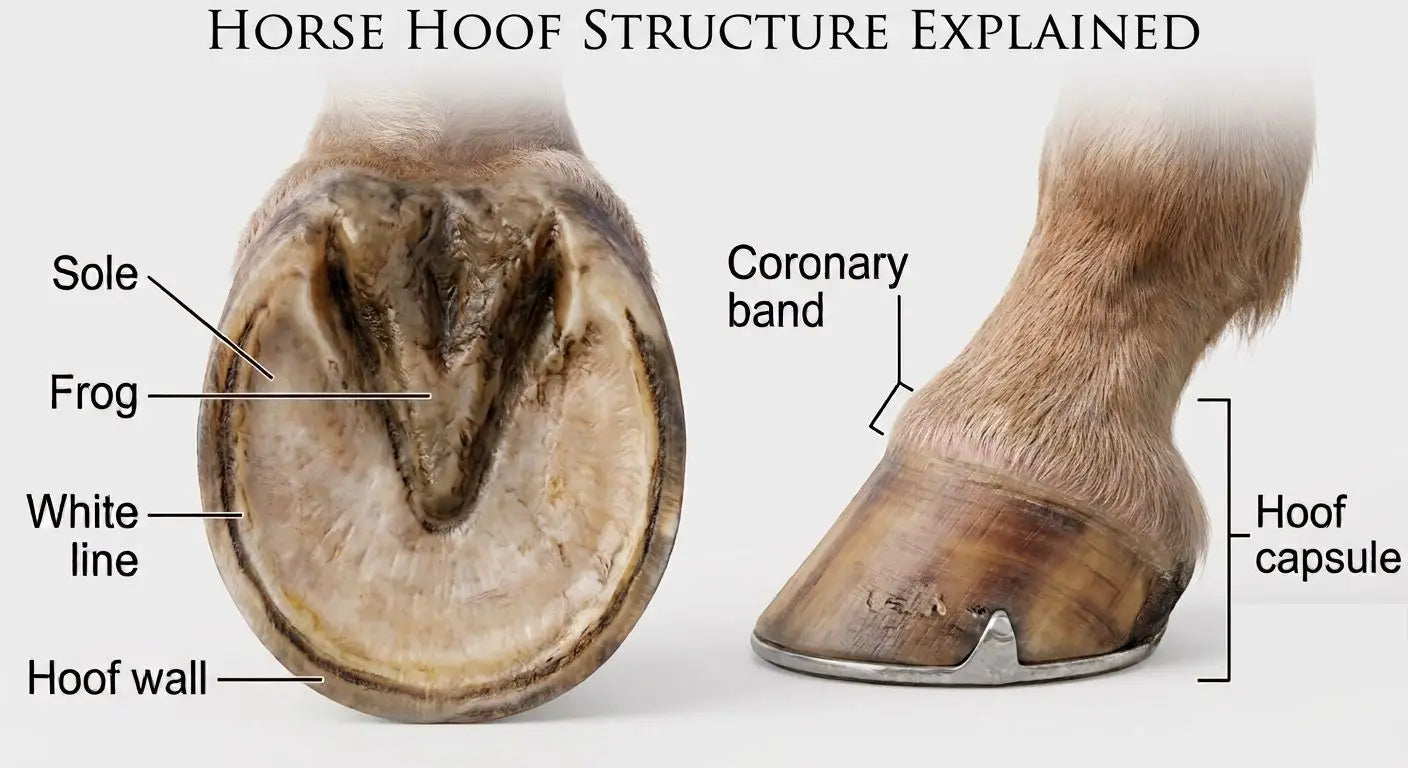
It's helpful to understand the main parts of the hoof. The hoof wall protects the foot, the sole and frog help absorb shock and support movement, while the white line and coronary band play important roles in hoof health and growth. Knowing these structures makes it easier to spot problems early and understand why regular hoof care matters.
Note: If your horse damages its hoof near the coronary band, recovery takes time. Hooves grow only about ¼ to ⅜ inch (6-10 mm) per month, so it may take 9-12 months for the damage to fully grow out.

What Should You Check During Daily Horse Hoof Care
A quick daily hoof inspection can help you catch small issues before they become severe problems. Spend a few minutes checking each hoof using the following checklist:
- Clean the Hoof: Remove dirt, stones, mud, and manure with a hoof pick.
- Inspect the Hoof Wall: Check for cracks, chips, or other signs of damage.
- Check the Frog and Sole: Look for foul odor, black discharge, bruises, or lodged objects.
- Feel for Heat or Swelling: This may indicate inflammation or injury.
- Check the Shoes: Look for loose or missing shoes and raised nails if your horse is shod.
- Watch for Lameness: Watch your horse move for any signs of limping, stiffness, or tenderness.
If you notice anything unusual, such as cracks, heat, swelling, or lameness, consult your farrier or veterinarian promptly.
Hoof & Tendon Supplements for Horses
View Collection →


Common Horse Hoof Problems and How to Spot Them
Not every hoof problem looks the same, but most fall into a few recognizable patterns. Knowing what to look for makes it much easier to catch trouble early, before it turns into something serious.
- Cracks in Horses: These start at the hoof wall and range from a hairline to a deep split reaching sensitive tissue. Dry, brittle hooves, an overdue trim, or an old injury are the usual causes. Small hoof cracks respond to trimming and moisture management; deep ones need a farrier to stabilize them.
-
Hoof Abscesses: Bacteria get trapped inside the hoof, often through a puncture or crack near the white line. The pressure that builds up is really painful - a horse that seemed fine yesterday might not want to put weight on that foot today. Have the abscess drained by a farrier or veterinarian, then keep the hoof clean and protected until it heals.
- Infections: Thrush and white line disease spread in wet, dirty conditions and can eat away at hoof tissue if unnoticed. Clean, dry footing and daily picking prevent most cases.
- Diseases: Laminitis, inflammation of the tissue connecting the hoof wall to the coffin bone, can be triggered by diet, illness, or uneven weight bearing. It needs a vet right away, not a wait-and-see approach.


Symptoms such as heat, swelling, malodor, or sudden lameness should never be dismissed, as untreated hoof complications invariably worsen rather than resolve independently.
How Do You Repair a Damaged Horse Hoof
The right treatment depends on the type and severity of the hoof damage. Acting early can prevent complications and improve your horse's recovery.
- Stabilize Cracks: Use a hoof patch or adhesive under the guidance of a farrier.
- Drain Abscesses: Drain hoof abscesses to relieve pressure and reduce pain.
- Epsom Salt Soak: Cleanse the hoof in a warm Epsom salt solution, if recommended by your veterinarian or farrier, to help draw out infection.
- Farrier Schedule: Follow a regular farrier schedule to support proper hoof growth and prevent further damage.
- Veterinary Care: Work with a veterinarian if the hoof capsule or internal structures are injured.
-
Patience: Be patient with recovery, as severe hoof damage can take several months to heal while the new hoof grows down from the coronary band.


How Often Should You Trim or Shoe a Horse's Hooves
Every horse grows more hoof than it wears down naturally, so trimming and shoeing matter even for horses that never leave the pasture. Most need attention every four to eight weeks, depending on hoof growth rate, workload, and footing. Some horses do fine barefoot; others need shoes for support or traction.
What Should You Feed for Healthy Hoof Growth
A nutritious, balanced diet is essential for healthy hoof growth. Feeding the right combination of protein, vitamins, and minerals helps produce stronger hoof tissue and supports long-term hoof health.
- High-Quality Forage: Good-quality hay or pasture should form the foundation of your horse's diet.
- Protein-Rich Feeds: Adequate protein, especially amino acids like methionine, lysine, and threonine, supports keratin production for strong hooves.
-
Biotin: This B-complex vitamin enhances hoof strength and growth when administered consistently over an extended period.
- Zinc and Copper: These trace minerals support hoof formation, tissue repair, and overall structural quality.
- Fresh, Clean Water: Adequate hydration maintains hoof elasticity and contributes to overall physiological health.

A balanced diet works best alongside regular trimming, daily hoof care, and routine farrier visits to keep your horse's hooves healthy.
The Bottom Line on Horse Hoof Care
Optimal hoof health derives from consistent daily attention and prompt responsiveness to early warning indicators. Catching a crack before it gets worse, or spotting an abscess before it becomes an emergency, keeps a horse sound much longer than waiting until something's already gone wrong.
Explore our selection of hoof care products to help keep your horse's hooves healthy.
FAQs about Hoof Care for Horses
Q1: What causes cracked horse hooves?
Ans: Cracks are usually caused by dry, brittle hoof walls, a missed trim, or an old injury near the coronary band. Switching between wet and dry weather is another common trigger, since the hoof expands and contracts as moisture levels change.
Q2: How do I know if my horse has a hoof abscess?
Ans: Sudden lameness in one leg, plus heat in the hoof and a strong pulse near the coronary band, usually means an abscess. Get a farrier or vet out to check with hoof testers and drain it, that'll take the pressure off.
Q3: What are the most common horse hoof infections?
Ans: Thrush and white line disease represent the two most common infections. Both spread in damp, dirty conditions and target the frog or white line. Catching them early is key to keeping them from spreading deeper into the hoof.
Q4: Are horse hoof diseases like laminitis preventable?
Ans: Not always, but the risk drops a lot with a controlled diet, regular trimming and shoeing, and quick treatment of any underlying illness. Because laminitis affects the connection between the hoof wall and coffin bone, prevention is always easier than treatment.
Q5: Do hoof supplements for horses actually work?
Ans: Yes, but only for the hoof that's still growing in. A hoof supplement for horses with biotin, zinc, and methionine can improve the quality of new growth, but it takes several months before you'll see a real difference, since hoof growth is slow to begin with.
Q6: What's the best way to handle horse hoof repair at home?
Ans: Daily cleaning, Epsom salt soaks for a suspected abscess, and keeping the area dry are all reasonable first steps. Anything beyond a minor crack or surface issue should go to a farrier or vet, since trying to fix it yourself can end up making it worse.
Related Articles


Recent Articles


