

Horsefly Bite Guide: Symptoms, Allergic Reactions & Best Treatments
Palvi Palvi

Horsefly bites are painful, sudden, and hard to ignore. Unlike a mosquito bite you barely feel, a horsefly bite is designed to cut through skin and it shows. And if you've watched your horse stomp, swish their tail, and pin their ears flat while standing in the pasture, there's a fair chance of horseflies are harassing them right at that moment.
For horse parents, dealing with horsefly bites during the summer months is an unavoidable reality, but understanding what's happening, what to look for, and how to respond can make a major difference in how quickly things resolve. This guide will help you to reduce complications and supports faster healing so you both can enjoy summer safely.
What is a HorseFly and What Does It Look Like?
A horsefly is a large, fast-moving biting insect known for its painful feeding behavior. It makes a buzzing sound. Unlike many insects that simply pierce the skin, a horsefly uses scissor-like mouthparts to cut the skin and draw blood, leaving a wound that resembles a small laceration.
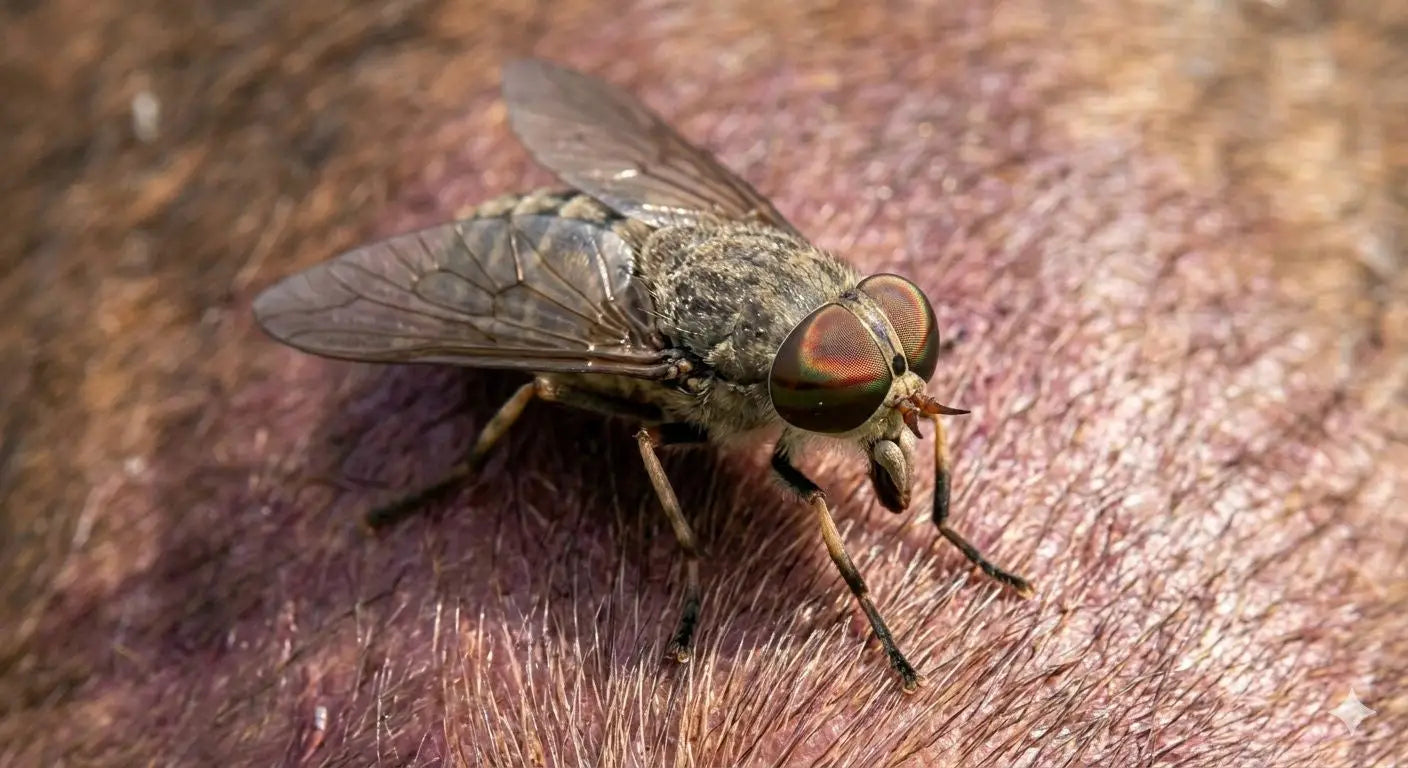
Peak season:
Horse flies are most aggressive during the summer months, particularly in warm, humid conditions near water, livestock, or tall grass. Deer flies behave similarly and are part of the same family.
Why Do Horse Flies Bite?
Only female horse flies bite because they need blood to produce eggs. This biological drive is what makes female horse flies locate targets using several signals, which is why horses attract them so easily. Here’s what draws them in:
- Carbon dioxide: Horse flies are attracted to the CO2 humans and animals exhale.
- Body heat: Large, warm-bodied animals like horses naturally draw more flies.
- Dark colors: Dark coats and clothing attract horse flies more than lighter colors.
- Movement: Motion triggers their pursuit instinct, making them highly persistent.
Horseflies mostly target a horse’s head, chest, belly, and legs to draw blood.
Symptoms of a Horsefly Bite on Horses
Horsefly bites are painful from the very moment of contact. Knowing what is normal helps you stay calm and respond appropriately. In horses, look for:
- Sudden stomping, persistent tail-swishing, or head-tossing focused on a particular area.
- Skin twitching or attempts to bite or rub a specific spot, which is their way of communicating real discomfort.
- Visible welts or raw patches on the belly, legs, and neck, which the flies target most often.
Understanding these signs is important because recognizing a horsefly bite early allows you to take the right steps to relieve your horse’s discomfort and prevent further irritation.
How to Treat a Horsefly Bite: Step-by-Step Instructions
The moment your horse gets bitten, how quickly and carefully you respond determines how smoothly things heal. Here is exactly what to do, in order.
Step 1: Clean the Bite Immediately
Wash the area with soap and warm water. This is the single most important step. It removes surface bacteria from the fly's mouthparts before they can cause an infection. Rinse properly, and pat dry with a clean cloth. Do not rub.
You can follow up with a proper antiseptic spray for your horse. EquiShield CK Topical Antiseptic Spray uses chlorhexidine and ketoconazole to kill bacteria and germs at the bite site, making it a solid first step before any ointment goes on.
Step 2: Reduce Swelling and Pain
Apply a cold compress or ice covered in a cloth to the bite for 10 to 15 minutes. This brings down the initial swelling and eases the burning. To dry the area quickly, apply Reducine Absorbent, which also helps reduce inflammation.
Step 3: Treat the Itch and Inflammation
Resist the urge to scratch the bite. Breaking the skin introduces bacteria and almost always makes things worse. Instead, use one of these:
- Hydrocortisone cream (1%) applied to the bite calms itching and reduces localized inflammation. Use it two to three times a day until the bite settles.
- Calamine lotion is a gentler option that soothes persistent itching and keeps the skin from feeling raw during the healing process.
- Oral antihistamines such as Heave Ho are the right choice when itching and swelling are spreading beyond the bite area and the reaction appears to be allergic.
Step 4: Protect the Wound from Infection
Once the area is clean and dry, apply an antibiotic ointment over the cut and cover it loosely with a bandage. This step matters deeply because an open bite on a horse will keep attracting flies, and a wound that flies visit continuously simply cannot heal.
You can also try using roll-on fly repellent before you ride to keep those pesky insects away, but be sure to apply it only to healthy skin, avoiding the wound, eyes, nose, and mouth, so your horse stays safe and comfortable.
Step 5: Monitor Daily
In most cases, you will see steady improvement, with redness and swelling gradually reducing over 24 to 48 hours and itching settling within a week. Keep the wound clean and protected, and continue applying topical treatment until the skin has fully closed. For horses that are prone to bite reactions season after season, it is worth addressing the underlying sensitivity as part of their ongoing care.
Most bites heal with care, but repeated exposure can trigger stronger reactions, watch for these symptoms.
Horsefly Bite Allergy: When the Reaction Goes Beyond Normal
Most bites settle down within a few days with basic care. But if you spend summers around horses and get bitten season after season, the body reacts more strongly, leading to an allergic response that spreads beyond the initial bite.
Severe allergic reaction signs, act immediately:
- Intense itching and swelling that spreads well beyond the bite site
- Hives or redness covering a wider area instead of staying localized
- Systemic symptoms such as dizziness, nausea, or feeling faint
- Difficulty breathing or chest tightness
- Swelling of the face, lips, or throat
Seek immediate medical attention if any of these extreme symptoms appear.
Horse Care Tip:
During fly season, check your horse’s bite sites daily. Catching issues early, like crusting, discharge, or repeated fly activity, helps wounds heal faster and prevents infections.
Keep Your Horse Bite-Free All Summer
HardyPaw carries vet-trusted fly sprays and repellents built for horses from gentle natural formulas to heavy-duty weatherproof sprays. Here's what horse parents are stocking up on:
- EquiShield FG Fly Guard Spray: Natural citronella, cedarwood & peppermint oils. Sensitive-skin safe.
- SWAT Clear Fly Repellent Ointment: Protects bite wounds & sores from flies while they heal.
- Absorbine UltraShield EX: Effectively repels and kills biting flies such as horseflies, deer flies, stable flies, mosquitoes, gnats, and other common pests.
Explore more HardyPaw pest-control solutions, carefully formulated to protect horses from flies and biting insects.
Manage Bites, Maximize Comfort
With awareness, quick care, and consistent protection, horsefly bites become manageable instead of stressful. Clean early, treat gently, and monitor closely. Your attention helps prevent complications, keeps healing on track, and ensures summer days stay focused on comfort, bonding, riding, and steady recovery together.
Frequently Asked Questions
Q1: How long does a horsefly bite last?
Ans: Most horsefly bites improve within 24-48 hours, but itching may last up to a week. If symptoms worsen after 48 hours instead of improving, seek medical advice to rule out infection.
Q2: Is a horsefly bite dangerous?
Ans: A horsefly bite is usually not dangerous, but it can be very painful and cause swelling, irritation, or infection if scratched. In rare cases, it may trigger an allergic reaction, such as breathing difficulty, facial swelling, or faintness, or if the bite becomes infected with spreading redness, pus, fever, or worsening pain. Both require prompt medical attention.
Q3: Why do horsefly bites hurt so much more than mosquito bites?
Ans: A mosquito makes a clean puncture that most people barely notice. Female horse flies use scissor-like mouthparts to cut through skin and feed on blood directly, which causes a tearing wound that is immediately painful and produces a much more visible inflammatory response than other insect bites.
Q4: Should I pop the welt from a horsefly bite?
Ans: No. Breaking the skin significantly increases the risk of infection. Clean the area with soap and water, apply antibiotic ointment, and cover loosely with a bandage while it heals.
Q5: Can horse flies make my horse sick?
Ans: Generally, horse flies are not dangerous. But repeated biting causes open sores, secondary skin infections, and ongoing stress that genuinely affects your horse's comfort and wellbeing over the course of the summer. Consistent fly spray and daily skin checks go a long way.
Subscribe to Media Posts
Recent Articles


