

10 Christmas Foods That Are Safe to Share with Your Furry Friend
Atamjeet Kaur 4 min read

And toxic foods that could ruin the holiday spirit!
The holidays are here, and of course, you want to share the joy with your dog. But before slipping them table scraps, it’s crucial to know which Christmas foods are safe and which can be toxic. Some common festive favorites can cause serious health problems, while others are perfectly fine in small, plain portions.
Below are 10 Christmas foods your dog can enjoy, plus the ones you should always keep out of reach.
1. Plain Turkey (Boneless and Unseasoned)
Lean, well-cooked turkey meat (no skin, bones, or seasoning) is a great high-protein treat.
Avoid fatty skin and all bones, which can splinter and cause blockages. Keep portions small and treat it as a snack, not a full meal.
2. Steamed or Boiled Carrots
Carrots are low-calorie, crunchy, and packed with vitamins and fiber.
Serve them plain—raw, steamed, or lightly boiled. Skip butter, salt, and seasonings.
3. Green Beans
Plain, cooked green beans (no cream, butter, or salt) are safe and nutritious.
Avoid green bean casserole, as creams, fried onions, and seasonings aren’t dog-friendly.
4. Brussels Sprouts
Plain, cooked Brussels sprouts can be shared in small amounts.
They’re nutritious, but may cause gas in some dogs, so introduce slowly and in moderation.
5. Plain Cooked Sweet Potatoes
Sweet potatoes are rich in vitamins and fiber and are usually a hit with dogs.
Only offer them plain—no sugar, marshmallows, butter, cream, or spices. A small portion is enough.
6. Salmon
Plain, cooked salmon (no bones, salt, or seasoning) is a great source of omega-3s for skin and coat.
Avoid smoked salmon, which is high in sodium, and always double-check for bones.
7. Plain Cooked Pumpkin
Unsweetened, cooked pumpkin can support digestion and soothe sensitive stomachs.
Do not give pumpkin pie filling, which contains sugar and spices.
8. Apples (Seedless and Sliced)
Seedless, sliced apples offer fiber and vitamin C as a light, refreshing treat.
Remove the core and all seeds, which can be harmful in larger amounts.
9. Lamb Meat (Boneless and Unseasoned)
Plain, cooked lamb (no bones, fat, or seasoning) can be a festive protein treat.
Avoid fatty pieces and any cooked bones that could splinter or cause blockages.
10. Plain Mashed Potatoes (Without Butter or Seasoning)
Plain mashed potatoes (no butter, cream, salt, garlic, or gravy) are safe in small portions.
They’re high in carbs, so offer only occasionally and in moderation.
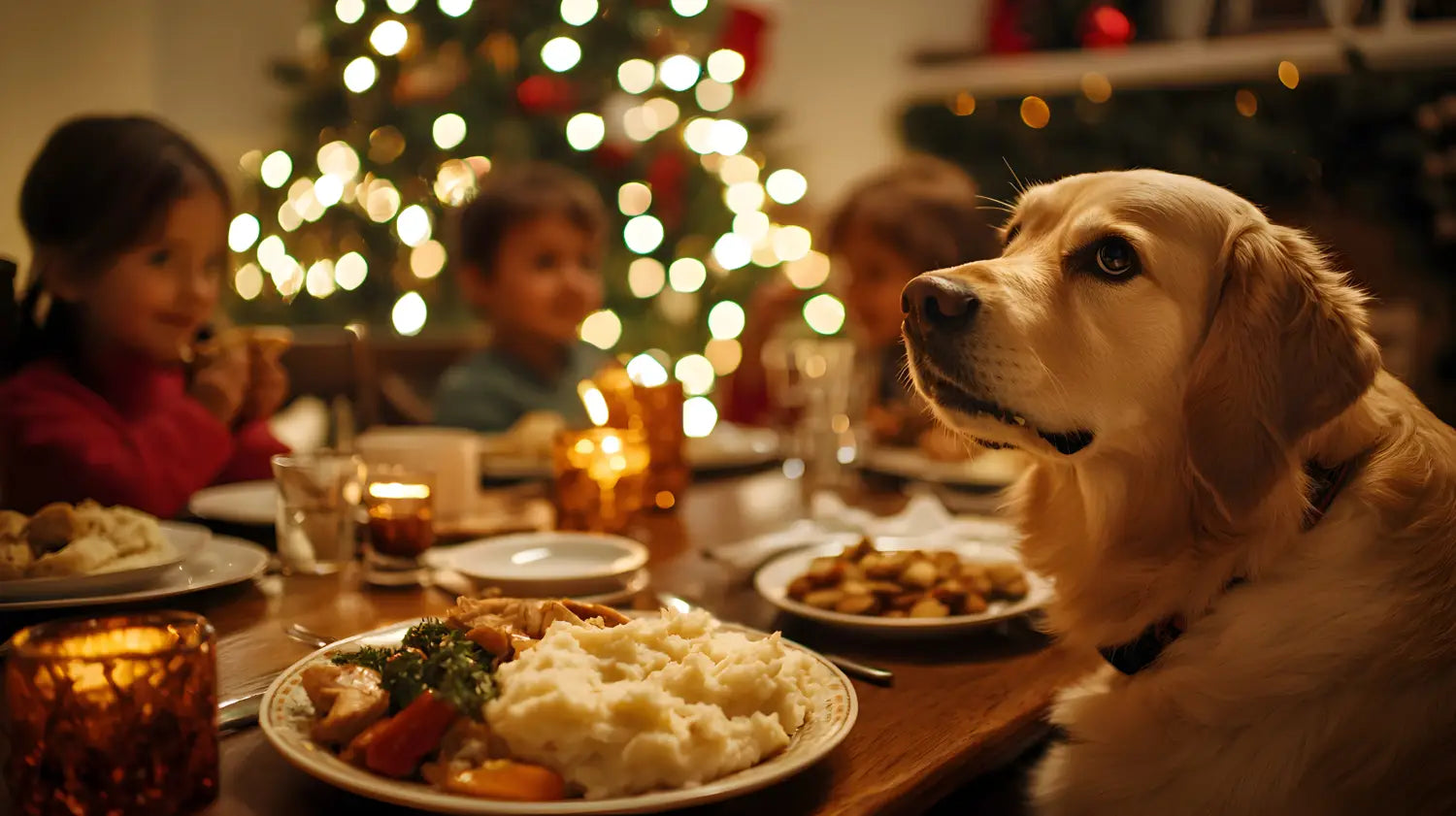
Understanding Unsafe Foods for Dogs: What to Keep Away
These common Christmas foods are dangerous or toxic for dogs and should always be avoided:
- Chocolate: Contains theobromine; can cause vomiting, diarrhea, heart issues, and seizures (dark chocolate is worst).
- Christmas pudding, mince pies, fruit cake: Raisins, sultanas, and currants can cause kidney failure even in small amounts.
- Onions, garlic, leeks, & chives: These can damage red blood cells and cause anemia.
- Ham and processed meats: Very high in salt and fat; can lead to dehydration, pancreatitis, and kidney problems.
- Bones (especially cooked): Can splinter and cause choking, blockages, or internal injury.
- Alcohol and foods containing alcohol: Toxic to dogs; found in eggnog, brandy butter, and many desserts.
- Nutmeg and spiced foods: Nutmeg contains myristicin, which can cause tremors, seizures, and a raised heart rate.
- Xylitol (artificial sweetener): In sugar-free candies, gum, and some desserts; can cause low blood sugar, seizures, and liver failure.
Signs of Poisoning in Dogs: What to Watch For
Contact your vet immediately if you suspect your dog has eaten something toxic. Common signs include:
- Vomiting or diarrhea
- Loss of appetite
- Lethargy or weakness
- Tremors or seizures
- Abnormal heart rate
- Drooling or mouth irritation
- Unsteady walking or collapse
- Pale gums
- Difficulty or inability to urinate
Keep Christmas Safe for Your Dog
By knowing which foods are safe and which are toxic, you can include your dog in the celebrations without risking their health. Stick to plain, unseasoned foods, keep treats to small portions, and avoid sharing anything you’re unsure about.
If your dog ever eats a risky food, call your vet right away.
Here’s to a safe, happy, and healthy holiday season for you and your four-legged companion!
Frequently Asked Questions
Q1: Can dogs eat turkey skin at Christmas?
No. Turkey skin is high in fat and can trigger pancreatitis or stomach upset. Only offer plain, boneless, unseasoned turkey meat.
Q2: What are the common Christmas foods dogs can't have?
Avoid chocolate, mince pies, and fruit cakes with raisins, ham, onions, garlic, cooked bones, alcohol, nutmeg, and anything containing xylitol. These can be very dangerous.
Q3: Is it safe to give dogs Christmas ham as a treat?
No. Ham is high in salt and fat and often coated in sugary or seasoned glazes, which can cause dehydration, pancreatitis, and kidney issues.
Q4: What should I do if my dog eats raisins or grapes?
Contact your vet or a pet poison helpline immediately. Raisins and grapes can cause kidney failure, even in small amounts.
Q5: Can I give my dog cheese or dairy products at Christmas?
Some dogs tolerate small amounts of plain cheese, but many are lactose intolerant. Avoid creamy sauces, eggnog, and rich dairy dishes.
Q6: How many dog-safe Christmas foods can my dog eat?
Treats should be no more than about 10% of your dog’s daily calories. Keep portions small, use festive foods as occasional treats, and ask your vet if you’re unsure about amounts.
Related Articles


Recent Articles