

Dog Joint Health Guide on Causes, Signs, and Supplements
Manan Chawla 13 min read

Every pet parent wants to see their dog run, play, jump, and enjoy everyday adventures with ease, which is why dog joint health plays such an important role in daily comfort. When a dog’s joints work well, movement feels natural and comfortable. When joints begin to stiffen or lose their protective cushioning, simple activities can become challenging.
Joint issues are far more common than most pet parents realize and can affect dogs of every age, size, and breed. The good news is that there are many ways to support joint health before problems become serious. With a mix of awareness, at-home care, nutrition, and veterinary guidance, you can help your dog stay active for years.
This guide explains what shapes joint health, the early signs of discomfort, how you can support your dog at home, and trusted joint supplements that many pet parents rely on. By the end, you’ll feel confident knowing exactly what your dog needs to move comfortably through every stage of life.
Why Joint Health Matters So Much for Dogs
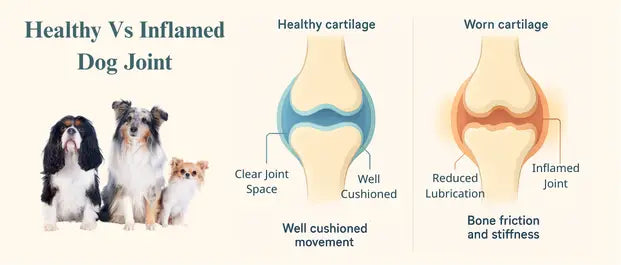
Joints act as the hinges and shock absorbers of your dog’s body. They help your dog walk, run, stretch, sit, stand, climb, and jump. A healthy joint has smooth cartilage, a good amount of lubrication, and strong surrounding muscles to keep it stable. When any part of that system weakens, mobility becomes harder.
A dog may begin slowing down, avoiding stairs, or becoming less playful. Many pet parents assume this is simply part of aging, but discomfort is often the real cause. Identifying joint issues early is one of the best ways to improve your dog's long-term joint support and comfort. Early support usually leads to much better outcomes.
Joints also affect mood. When movement becomes uncomfortable, dogs may become quieter, irritable, or less social. Protecting joint health helps protect your dog’s happiness as well as their mobility.
What Affects a Dog’s Joint Health
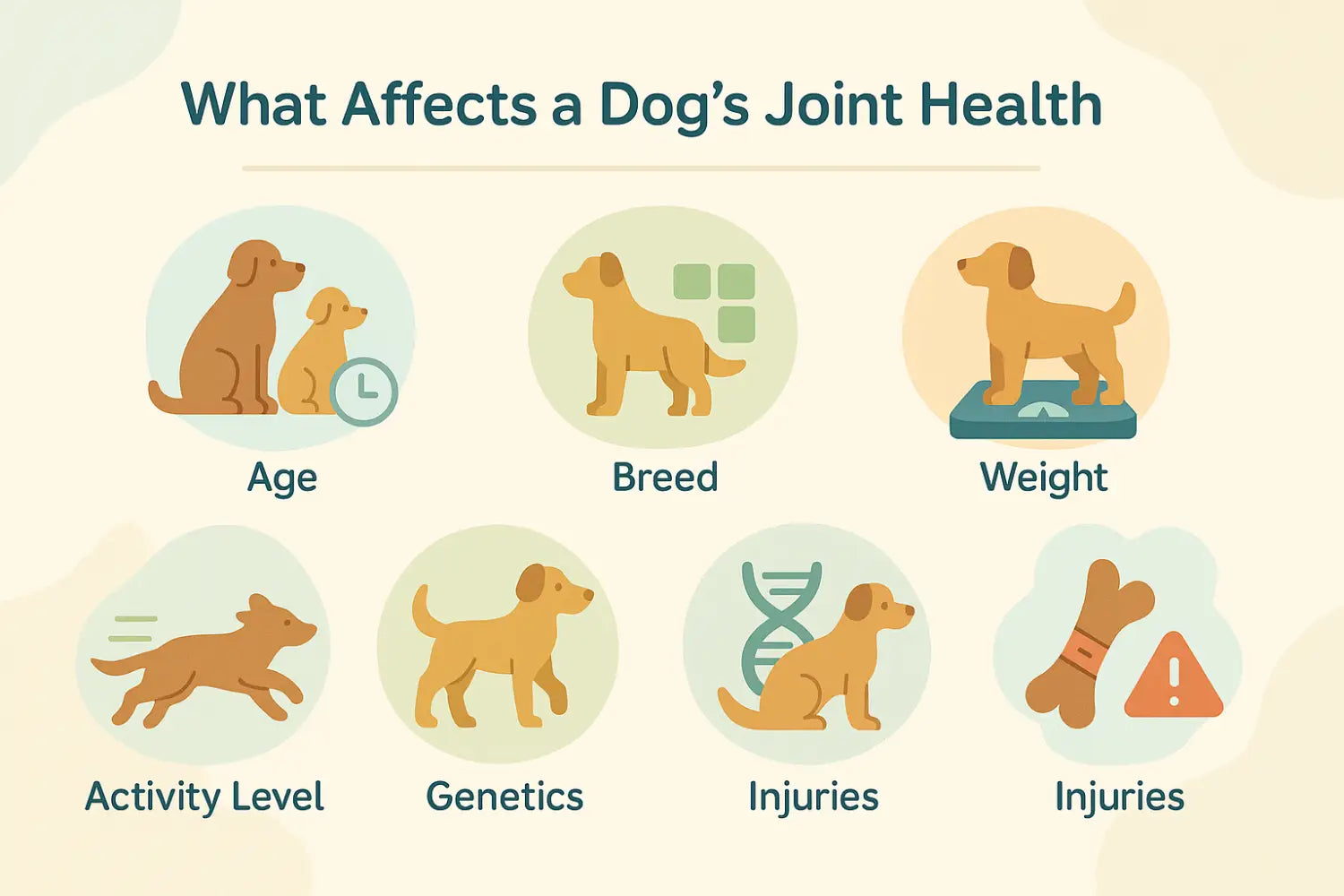
Dog joint health depends on several factors. Understanding these helps pet parents provide stronger support and take steps that reduce long-term problems.
1. Age-Related Changes
As dogs grow older, the cartilage inside their joints becomes thinner. The body produces less natural lubrication, which increases friction. These changes are normal but can lead to stiffness and slower movement.
2. Breed Tendencies
Some breeds are more likely to develop joint problems.
• Large breeds like Golden Retrievers, German Shepherds, Rottweilers, Bulldogs, and Labradors often face hip or elbow concerns.
• Small breeds like Pomeranians and Chihuahuas may experience patellar luxation, where the kneecap shifts out of place.
Knowing your dog’s breed risks helps you stay proactive rather than reactive.
3. Body Weight
Extra weight puts added pressure on a dog’s joints. Even a few pounds can make a noticeable difference. Maintaining a healthy weight is one of the simplest and most effective ways to protect joint comfort.
4. Activity Levels
Both too much and too little activity can impact joint health.
High-impact exercise can strain young joints.
Very low activity can reduce flexibility and muscle support.
Balanced, steady movement keeps joints working well.
5. Genetics
Some dogs inherit joint tendencies from their parents. This is especially common with conditions like hip and elbow dysplasia.
6. Past Injuries
A ligament tear, a hard fall, or joint trauma can create long-term weakness in the affected area. Dogs who have experienced injury earlier in life may require more joint support as they age.
Understanding these influences allows you to build a long-term joint care plan that supports your dog’s needs year after year.

Common Joint Problems in Dogs
Several joint issues commonly appear in dogs. Some develop slowly, while others happen suddenly.
1. Osteoarthritis
Osteoarthritis is the most common joint issue. It occurs when joint cartilage wears down, leading to inflammation and discomfort. It can affect any dog but is especially common in seniors.
2. Hip Dysplasia
This condition appears when the hip joint doesn’t fit together properly. Over time, it can lead to arthritis and mobility challenges. It often begins early in life and is more common in large breeds.
3. Elbow Dysplasia
Similar to hip dysplasia, but located in the elbow joint. Dogs may show front leg lameness, stiffness, or difficulty rising.
4. Patellar Luxation
This occurs when the kneecap slides out of place. Small breeds experience this most often. Mild cases may come and go while severe cases affect everyday movement.
5. CCL Injuries
The cranial cruciate ligament is similar to the ACL in humans. It helps stabilize the knee. A sudden twist or jump can cause a tear. This is one of the most common orthopedic injuries in dogs.
Knowing these conditions helps pet parents recognize problems early and seek appropriate care.
Hip & Joint Supplements for Dogs


Nutramax Cosequin DS Joint Health Chewable Supplement for Dogs - With Glucosamine and Chondroitin


Early Signs of Joint Problems That Pet Parents Should Notice
Dogs rarely complain when something hurts. They often hide discomfort until it becomes harder to manage. Paying attention to subtle changes helps you catch joint issues sooner.
Common early signs include:
· Hesitation when standing up
· Stiffness after naps
· Slower walking pace
· Limping or favoring one leg
· Difficulty jumping into the car or onto furniture
· Avoiding stairs
· Less interest in play
· Mood changes such as irritability or withdrawal
Even small changes in movement may signal discomfort. Never assume your dog is just “getting older.” Mobility changes are often treatable when caught early.

How Pet Parents Can Support Joint Health at Home
Supporting joint health doesn’t have to be complicated. Small daily habits can make a powerful difference.
1. Maintain a Healthy Weight
A lean body reduces stress on joints and helps slow joint degeneration. Even a small amount of weight loss can noticeably improve comfort.
2. Choose Gentle, Regular Exercise
Steady, low-impact activity keeps joints flexible and muscles strong.
Great options include:
· Controlled walks on soft ground
· Swimming
· Slow, steady fetch instead of high jumps
· Shorter but more frequent activity sessions
Too much running, rough play, or sharp turns can strain joints, especially in young or senior dogs.
3. Make Your Home Joint-Friendly
Simple adjustments can prevent slips, falls, and strains.
Helpful additions include:
· Non-slip rugs on hardwood floors
· Ramps for getting onto the couch or bed
· A supportive, orthopedic pet bed
· Raised food bowls to reduce neck strain
These small upgrades create a safer space for dogs of all ages.
4. Use Warmth and Massage
Warm compresses can soothe stiffness. Gentle massage improves circulation and eases tight muscles.
If you’re unsure how to massage your dog safely, your veterinarian or a certified canine therapist can guide you.
5. Supportive Stretching
Light stretching helps maintain flexibility. Only stretch your dog under guidance from your vet or a certified professional to avoid accidental injury.
Home care works best when combined with proper nutrition and, when needed, veterinary support.
Essential Nutrition and Supplements for Strong Joint Support
Healthy joints help pets stay active and comfortable. When stiffness or slowed mobility appears, key nutrients can make a real difference. Many trusted veterinary brands use these ingredients because they reliably support joint strength, lubrication, and overall comfort.
1. Glucosamine
This nutrient supports worn joint padding, helping dogs that struggle with rising, climbing, or moving comfortably during everyday activity.
• Nutramax Cosequin Standard Strength Joint Health Supplement for Dogs
• Nutramax Dasuquin Joint Health Supplement
• VetriScience GlycoFlex Plus for Medium to Large Dogs
• Nupro Silver Joint & Immunity Support for Dogs
2. Chondroitin
This ingredient helps joints retain moisture for easier shock absorption, especially when dogs feel discomfort after play or long walks.
• Nutramax Dasuquin Joint Health Supplement
• Ceva Synovial Flex Advanced Joint Support Soft Chews for Dogs Over 60 lbs
• VetriScience GlycoFlex 2 Joint Supplement for Dogs
• Nupro Silver Joint & Immunity Support for Dogs
3. Methylsulfonylmethane (MSM)
This compound helps dogs loosen up after rest by easing tension inside joints and supporting smoother, more flexible movement each day.
• Nutramax Cosequin Maximum Strength with MSM Plus Omega-3s
• Nutramax Cosequin Senior Dog Soft Chews
• VetriScience GlycoFlex Stage 3 Joint Supplement for Dogs
4. Omega 3 Fatty Acids
These healthy fats help calm inflammation that slows dogs down, making movement more comfortable during activity and rest.
• Nutramax Cosequin Maximum Strength with MSM Plus Omega-3s
• Nutramax Cosequin Senior Dog Soft Chews
• VetriScience Golden Years Strength & Stability Joint Support for Senior Dogs
5. Hyaluronic Acid
This natural lubricant supports smoother movement by improving joint fluid quality for dogs that appear stiff during daily activity.
• Halstrum LubriSyn HA Pet Joint Formula (Dog Safe)
• VetriScience GlycoFlex Stage 3 Joint Supplement for Dogs
Top Joint Health Supplements Trusted by Pet Parents
Choosing the right supplement can make a real difference in your dog’s comfort and mobility. The products below are widely trusted by pet parents and veterinarians because they combine key nutrients that support joint cushion, flexibility, and everyday movement.
1. Nutramax Cosequin Joint Health Supplements
A long-standing favorite among dog parents, Nutramax Cosequin products pair glucosamine and chondroitin with supportive compounds like MSM and omega-3s. Many pet parents notice that their dogs move more easily on walks and stairs.
Why dog parents trust it:
• Proven blend of core joint nutrients
• Multiple formulations for size and age
• Easy to give in chew or capsule form
2. Nutramax Dasuquin Advanced
Dasuquin takes joint support a step further by combining glucosamine, chondroitin, and avocado/soybean unsaponifiables (ASU). It is often chosen for dogs showing signs of ongoing stiffness.
Why dog parents trust it:
• Enhanced joint support formula
• Recommended by many veterinarians
• Options for both small and large dogs
3. VetriScience GlycoFlex Series
The GlycoFlex range offers staged support, from basic daily comfort to stronger formulas for aging or active dogs. Many pet parents like how the chews also include antioxidants for overall wellness.
Why dog parents trust it:
• Structured to match dogs’ changing needs
• Palatable soft chews
• Supports comfort and daily activity
4. Ceva Synovial Flex Advanced Joint Support
Ceva’s Synovial Flex combines glucosamine, chondroitin, MSM, and omega-3 fatty acids to help with joint lubrication and flexibility. Pet parents often use it when regular activity seems to cause extra strain.
Why dog parents trust it:
• Multi-nutrient approach to mobility
• Soft chew format dogs enjoy
• Helps support joint comfort after activity
5. Nupro Silver Joint & Immunity Support
This supplement combines joint support with immune-friendly nutrients. Many owners choose it when their dog needs both joint comfort and overall health support.
Why dog parents trust it:
• Dual focus on joint and immune health
• Easy to administer daily
• Good choice for dogs with multiple needs
6. Halstrum LubriSyn HA Pet Joint Formula
Halstrum’s LubriSyn products focus on hyaluronic acid, a key component of joint fluid that helps keep movement smooth. Many owners use this alongside other supplements to enhance lubrication.
Why dog parents trust it:
• Targets joint fluid quality
• Suitable for daily use
• Works well with other nutrient blends
Veterinary Care and Diagnostic Options
While home care and supplements are important, veterinary guidance is a key part of managing joint health. A vet can confirm the cause of a dog’s discomfort and recommend the most effective treatment plan.
Common evaluation methods include:
· A physical exam
· X-rays to assess joint structure
· Joint fluid analysis
· Gait evaluation
· Blood work when needed
Treatments vary depending on the condition. Some dogs benefit from anti-inflammatory support, while others may need targeted therapies such as laser treatment or physical therapy.
Dogs with ligament injuries or severe dysplasia may require surgery to restore long-term function.
Working with your veterinarian helps ensure that your dog gets the right combination of care, especially when symptoms become more noticeable.
Advanced Therapies That Support Joint Health
Veterinary medicine continues to evolve, offering modern solutions that improve mobility and reduce discomfort.
Some advanced therapies include:
· Cold laser therapy
· Underwater treadmill sessions
· Acupuncture
· Chiropractic care
· Platelet-rich plasma therapy
· Stem cell therapy
These treatments can help reduce inflammation, strengthen muscles, and improve joint stability. They are often used for dogs with chronic arthritis, recovering from injuries, or mobility concerns.
References:
• https://www.akc.org/expert-advice/health/laser-therapy-in-dogs/
• https://rehabvet.com/blog/canine-underwater-treadmill/
• https://www.akc.org/expert-advice/health/acupuncture-for-dogs/
• https://vcahospitals.com/know-your-pet/platelet-rich-plasma
Preventing Joint Problems Before They Begin
Even dogs that show no signs of joint issues can benefit from early support. Prevention is one of the best gifts a pet parent can give.
Helpful habits include:
· Regular exercise that matches your dog’s age and build
· Keeping your dog at a healthy weight
· Avoiding slippery floors
· Introducing ramps early
· Giving joint supplements before stiffness begins
· Scheduling routine wellness exams
Simple habits like steady exercise, safe flooring, and early supplement use can make a real difference in dog joint health as your dog grows and ages.
Puppies especially benefit from gentle growth. Avoid hard jumps, sharp turns, and high-impact play until their bones are fully developed.
Seniors benefit from warmth, steady exercise, and comfortable bedding that supports their joints.

Final Thoughts
Joint health plays a huge role in your dog’s quality of life. When joints feel good, your dog moves with confidence, joy, and energy. When joints begin to wear down, even simple movements can become challenging.
By understanding the causes of joint problems, watching for early signs, and creating daily habits that support mobility, you can protect your dog’s comfort well into their senior years.
Strong joint care includes balanced exercise, proper nutrition, a safe home environment, and, when needed, supportive supplements from trusted brands like Nutramax, Ceva, VetriScience, Virbac, Nupro, and Halstrum. Together, these steps help keep your dog active, playful, and happy.
Frequently Asked Questions
Q1: How can I tell if my dog is starting to have joint problems?
Ans: Early signs often show up as small changes such as stiffness after naps, slower walking, or hesitation on stairs. These may be early signs of dog joint pain and can appear before noticeable limping or weakness. Watch for repeated patterns rather than one-time moments. If the changes continue, a vet check can help confirm what your dog needs for stronger joint health. Early support makes long-term improvement easier.
Q2: What should I do if my dog is having trouble getting up or climbing stairs?
Ans: Start with gentle changes at home like non-slip rugs, ramps, and shorter but steady outings. These adjustments reduce strain while helping to improve dog mobility day to day. You can also pair these changes with joint-friendly nutrients to support comfort. Ingredients such as glucosamine, chondroitin, and MSM promote healthier movement when used consistently. If the trouble continues or becomes sudden, reach out to your veterinarian.
Q3: Do joint supplements actually help dogs with stiffness or slowing down?
Ans: Many dogs show improvement with dog joint supplements when used daily and started early. Key ingredients like glucosamine, MSM, chondroitin, and omega-3 fatty acids help support cartilage and ease general stiffness. Most dogs need a few weeks before changes become noticeable. Supplements work even better when combined with gentle activity, weight control, and a joint friendly home routine. Ask your vet for help choosing the best formula for your dog’s needs.
Q4: What type of exercise is safest for a dog with joint pain or early mobility issues?
Ans: Low-impact activity is the safest and most helpful approach. Short, steady walks, slow fetch, and swimming all support improving dog mobility without adding pressure to sensitive joints. Avoid hard landings, sharp turns, and extended runs. Aim for movement that keeps muscles strong and joints flexible. If you are unsure how much exercise is right, your veterinarian can guide you.
Q5: When should I take my dog to the vet for joint pain or mobility concerns?
Ans: If your dog is showing recurring stiffness, limping, or avoiding stairs, it is time for a checkup. Sudden signs of dog joint health issues like yelping or refusing to move should be evaluated right away. A vet can help identify the root cause and recommend a treatment plan. Early care often leads to better long-term mobility. Even mild symptoms deserve attention, since addressing them early protects your dog’s comfort over time.
Related Articles


Recent Articles

