

Simparica Trio vs Heartgard Plus - What’s Best for Your Dog?
Edward Simmons (Updated: Jun 10, 2026)

Pet parents comparing Heartgard Plus vs Simparica Trio are usually trying to answer one practical question: which monthly dog parasite preventive gives the right level of protection for their dog?
Key Takeaways
Simparica Trio vs Heartgard Plus
- Simparica Trio and Heartgard Plus are both monthly prescription preventives for dogs, but they are not the same.
- Simparica Trio offers broader protection against heartworms, fleas, ticks, roundworms, and hookworms, while Heartgard Plus focuses on heartworms, roundworms, and hookworms.
- Heartgard Plus contains ivermectin and pyrantel, while Simparica Trio contains sarolaner, moxidectin, and pyrantel.
- Choose based on your dog’s age, weight, lifestyle, flea and tick exposure, health history, and your veterinarian’s guidance.
Several FDA-approved parasite preventives are available for dogs, including oral chews, topical treatments, and injectable options such as ProHeart 12, NexGard Plus, Revolution, Advantage Multi, Bravecto, Simparica Trio, and Heartgard Plus. These products vary by active ingredient, dosing method, parasite coverage, safety considerations, and whether they protect against external threats such as fleas and ticks.
While they serve a similar core purpose, their active ingredients, parasite coverage spectrum, and safety profiles differ significantly. Understanding these differences is essential for choosing a prevention plan that fits your dog’s age, weight, health history, lifestyle, and local parasite risk.
In this guide, we’ll compare Simparica Trio vs Heartgard Plus by ingredients, heartworm prevention, flea and tick coverage, safety, cost, switching guidance, and frequently asked questions.
Heartgard Plus vs Simparica Trio: Key Difference
The key difference is coverage: Simparica Trio adds flea and tick protection, while Heartgard Plus focuses on heartworms, roundworms, and hookworms. If your dog needs broad-spectrum monthly parasite protection in one chew, Simparica Trio may be a better fit. If your dog mainly needs heartworm and intestinal worm prevention, Heartgard Plus may be a more focused and budget-friendly option.
|
Choose Simparica Trio if... |
Choose Heartgard Plus if... |
|
Your dog needs heartworm, flea, tick, roundworm, and hookworm coverage. |
Your dog mainly needs heartworm, roundworm, and hookworm protection. |
|
You want one monthly chew that may replace a separate flea and tick preventive. |
You already use a separate flea and tick product or your dog has lower external parasite exposure. |
|
Your dog spends time outdoors, in wooded areas, at parks, or in high tick-risk regions. |
Your dog is pregnant, nursing, intended for breeding, or younger than 8 weeks, with veterinary guidance. |
Understanding Simparica Trio and Heartgard Plus
Before diving deeper into the comparison, it helps to understand what each medication offers, how they work, and why veterinarians recommend them for parasite prevention in dogs.
Simparica Trio for Dogs: Broad-Spectrum Protection in a Single Chew
Simparica Trio is a prescription-only, once-a-month chewable tablet that combines three active ingredients, sarolaner, moxidectin, and pyrantel, to provide broad parasite protection. According to the FDA, Simparica Trio is approved to prevent heartworm disease, kill adult fleas, treat and prevent flea infestations, treat and control several tick species, and treat and control roundworm and adult hookworm infections.
- Sarolaner: Targets fleas and multiple tick species, including lone star, Gulf Coast, American dog, black-legged, and brown dog ticks.
- Moxidectin: Helps prevent heartworm disease by eliminating immature heartworm larvae transmitted by mosquitoes.
- Pyrantel: Treats and controls intestinal parasites, specifically roundworms and adult hookworms.
Important Considerations
- Minimum age/weight: Approved for dogs and puppies 8 weeks of age and older that weigh 2.8 pounds or more.
- Breeding, pregnant, or lactating dogs: Not evaluated, consult your veterinarian before use.
- Chewable and palatable: Liver-flavored tablet that many dogs accept easily.
- Prescription required: A veterinary exam and heartworm test may be needed before starting.
Simparica Trio Side Effects
- Possible side effects: Vomiting, diarrhea, lethargy, decreased appetite, itching, ear infection, increased urination, hyperactivity, or increased thirst.
- Neurologic caution: Sarolaner belongs to the isoxazoline class. The FDA notes that isoxazoline products have been associated in some cases with muscle tremors, ataxia, and seizures in dogs and cats.
- Tell your veterinarian if your dog has a history of seizures or neurologic issues before using Simparica Trio.
Heartgard Plus for Dogs: Focused Protection for Heartworms and Intestinal Worms
Heartgard Plus is a monthly prescription chew for dogs that uses two active ingredients, ivermectin and pyrantel, to provide focused protection against internal parasites.
- Ivermectin: A macrocyclic lactone used to help prevent heartworm disease by eliminating immature heartworm larvae before they develop into adult heartworms.
- Pyrantel: Helps treat and control hookworms and roundworms, which can cause digestive issues, weight loss, and other health problems in dogs.
Important Considerations
- Minimum age: Labeled for dogs 6 weeks of age and older.
- Breeding, pregnant, and lactating dogs: Heartgard Plus has labeling support for use in these dogs when used as directed.
- No flea or tick protection: Heartgard Plus does not cover fleas or ticks.
- Prescription required: Talk to your veterinarian before starting or switching heartworm prevention.
Heartgard Plus Side Effects
- Possible side effects: Vomiting, diarrhea, and loss of appetite may occur in some dogs.
- Rare concerns: Depression, ataxia, or seizures may occur, especially in dogs with medication sensitivities.
- Always use the correct dose for your dog’s weight and follow your veterinarian’s instructions.
Does Simparica Trio Have Ivermectin?
No. Simparica Trio does not have ivermectin in it. Simparica Trio contains sarolaner, moxidectin, and pyrantel. Heartgard Plus is the product in this comparison that contains ivermectin, along with pyrantel.
This ingredient difference is one reason dog owners search for Simparica Trio vs Heartgard Plus. If your main question is, “does Simparica Trio contain ivermectin?” or “is ivermectin in Simparica Trio?”, the answer is no.
Does Heartgard Plus Cover Fleas and Ticks?
No. Heartgard Plus does not cover fleas or ticks. It is used for heartworm prevention and intestinal worm protection, specifically roundworms and hookworms. If your dog also needs flea and tick protection, your veterinarian may recommend a separate flea and tick product or an all-in-one option such as Simparica Trio.
Heartgard Plus vs Simparica Trio Comparison Table
The main difference between Simparica Trio and Heartgard Plus is that Simparica Trio protects against fleas, ticks, heartworms, roundworms, and hookworms, while Heartgard Plus protects against internal parasites like heartworms, roundworms, and hookworms.
|
Feature |
Simparica Trio |
Heartgard Plus |
|
Parasite Coverage |
Heartworms, fleas, ticks, roundworms, hookworms |
Heartworms, roundworms, hookworms |
|
External Parasite Protection |
Yes, kills fleas and controls multiple tick species |
No |
|
Active Ingredients |
Sarolaner, moxidectin, pyrantel |
Ivermectin, pyrantel |
|
Contains Ivermectin? |
No |
Yes |
|
Internal Parasite Protection |
Yes, heartworm, roundworm, and adult hookworm coverage |
Yes, heartworm, roundworm, and hookworm coverage |
|
Minimum Age |
8 weeks |
6 weeks |
|
Minimum Weight Requirement |
2.8 pounds |
No minimum weight restriction listed for labeled use |
|
Safe for Breeding Dogs |
Not evaluated |
Labeled for use when given as directed |
|
Safe for Pregnant/Lactating Dogs |
Not evaluated |
Labeled for use when given as directed |
|
Prescription Required |
Yes |
Yes |
|
Flea Kill Speed |
Begins killing fleas within 4 hours |
Not applicable |
|
Tick Kill Speed |
Begins killing ticks within 8 hours |
Not applicable |
|
Form |
Chewable tablet |
Chewable tablet |
|
Dosage Frequency |
Monthly |
Monthly |
|
Best For |
Dogs needing broader heartworm, flea, tick, and intestinal worm protection |
Dogs needing focused heartworm and intestinal worm protection |
Now that you’ve seen how Simparica Trio and Heartgard Plus stack up side by side, the next step is understanding how parasite risks vary by region and season, and how that impacts your choice.
Bonus protection: As of April 2025, Simparica Trio received an additional FDA indication related to preventing flea tapeworm infection, Dipylidium caninum, by killing the fleas that carry it. Because label claims can change over time, always confirm the most current product indication with your veterinarian or the product label.
Seasonal Parasite and Heartworm Risk Map for Dogs in U.S. Regions
Parasite activity is not uniform across the country, and skipping prevention during perceived “off” months can leave pets vulnerable. Heartworm disease has been reported in dogs in all 50 states, and the FDA notes that year-round prevention is best.
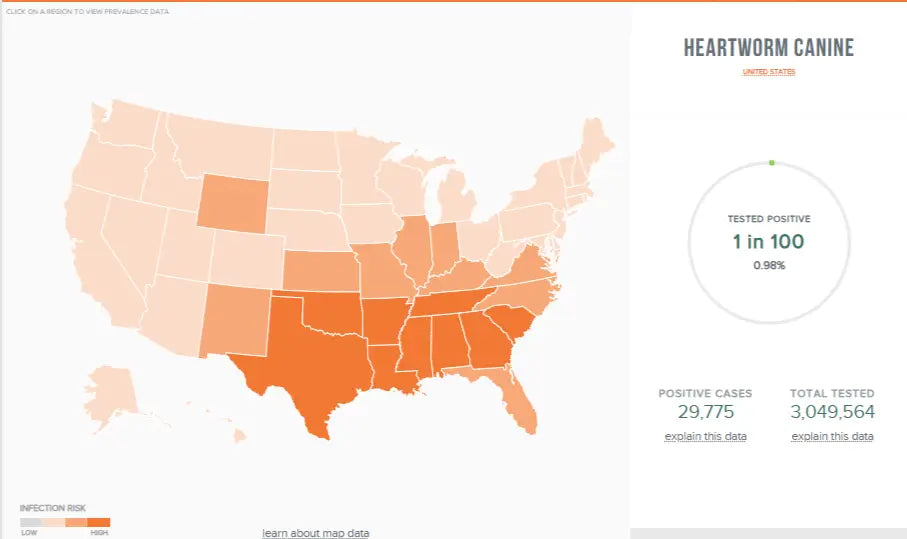
Understanding regional patterns helps tailor your prevention strategy, whether that means year-round coverage or additional flea and tick protection based on where you live and your dog’s exposure risk.
Regional risk zones:
- Southeast and Gulf Coast, including FL, TX, and LA: Year-round risk for fleas, ticks, and heartworms.
- Midwest, including OH, IL, and MO: Spring to fall activity, with mosquito spikes in summer.
- Northeast, including NY, NJ, and MA: High Lyme disease risk from ticks, with fleas peaking in warmer months.
- Southwest, including AZ and NM: Year-round flea concerns, with ticks prevalent in rural areas.
- Pacific Northwest, including WA and OR: Tick and heartworm concerns vary locally and should be discussed with your veterinarian.
[CAPC Parasite Prevalence Maps]
HardyPaw Tip: Use local parasite data to guide product choice, but for many U.S. dogs, consistent year-round heartworm prevention is safest.
Can You Give Simparica and Heartgard Together or Switch Between Them?
Do not give Simparica Trio and Heartgard Plus together unless your veterinarian specifically instructs you to. Both products include heartworm-preventive ingredients, and both include pyrantel, so combining them may be unnecessary and could increase the risk of side effects.
If you are switching from Heartgard Plus to Simparica Trio, or from Simparica Trio to Heartgard Plus, ask your veterinarian how to time the switch so your dog does not miss heartworm coverage or receive overlapping doses.
Step-by-Step Transition Guide
- Consult your veterinarian before switching to make sure there are no health contraindications.
- Confirm heartworm testing needs, especially if your dog missed doses or is older than 7 months.
- Wait until the current monthly cycle ends. Do not double-dose unless your veterinarian directs you to.
- Administer the new treatment on schedule to avoid a lapse in protection.
- If you switch from Heartgard Plus to Simparica Trio, your dog will now receive added flea and tick protection.
- Monitor your dog after the first dose of any new medication and contact your veterinarian if side effects occur.
- Keep up with heartworm testing every 12 months regardless of brand.
Does Simparica Trio Kill Heartworms?
Simparica Trio helps prevent heartworm disease, but it should not be described as a treatment that kills adult heartworms. Heartworm preventives work by eliminating immature larval stages before they mature. Dogs with existing adult heartworm infections need veterinary diagnosis and treatment.
The FDA notes that dogs 7 months of age and older should be tested before starting prevention, and that heartworm preventives do not kill adult heartworms. This is why a negative heartworm test and annual testing are important before and during prevention.
Heartworm Protection: Why Ingredient Choice Can Matter
Both Simparica Trio and Heartgard Plus are vet-trusted heartworm preventives when used as directed. The two products use different heartworm-preventive ingredients:
- Simparica Trio uses moxidectin.
- Heartgard Plus uses ivermectin.
In some highly endemic areas, especially where lack of efficacy or macrocyclic lactone resistance has been discussed, your veterinarian may consider the active ingredient, dose, formulation, and your dog’s exposure risk when choosing a preventive. The American Heartworm Society notes that resistance concerns do not mean heartworm preventives are broadly ineffective, and consistent on-label dosing, mosquito control, and annual testing remain essential.
So, Which Should You Choose?
- Lower-risk area? Heartgard Plus may be a sound, effective, budget-friendly choice when heartworm and intestinal worm protection are the main needs.
- High flea, tick, or mosquito exposure? Ask your veterinarian whether Simparica Trio’s broader coverage is a better fit.
- Southeast, Gulf Coast, Mississippi River Valley, or another high heartworm-risk area? Ask your veterinarian which heartworm preventive strategy is safest for your dog.
Factors to Consider When Choosing Between Simparica Trio and Heartgard Plus
While both medications offer useful parasite protection, selecting the most suitable option for your dog requires evaluating several personalized factors.
1. Geographic Risk and Parasite Prevalence
If you live in a region with high flea and tick activity, such as wooded areas, humid climates, or rural zones, Simparica Trio is often the more complete choice because it includes external parasite protection.
In contrast, Heartgard Plus may be adequate for dogs in lower flea and tick exposure settings where heartworm protection is the main concern, especially if a separate flea and tick product is already being used.
2. Lifestyle and Activity Level
Active dogs that frequently go hiking, camping, hunting, or spend time at dog parks are at higher risk for external parasite exposure. Simparica Trio’s broader spectrum may be ideal in these scenarios. For mostly indoor or senior dogs with limited outdoor contact, Heartgard Plus may be a targeted internal parasite preventive.
3. Reproductive Status
If your dog is pregnant, nursing, or intended for breeding, Heartgard Plus may be the better fit because it has labeling support for those life stages when used as directed. Simparica Trio has not been evaluated for breeding, pregnant, or lactating dogs, so consult your veterinarian.
4. Dog Size and Weight-Based Dosing
Choosing the correct weight range is important for safe and effective parasite protection. Both Simparica Trio and Heartgard Plus come in chewable tablets with dosing options based on your dog’s body weight, so always confirm your dog’s current weight before giving a dose.
Simparica Trio is available for dogs from 2.8 to 132 lbs and provides monthly protection against heartworms, fleas, ticks, roundworms, and hookworms. It is divided into weight ranges such as 2.8 to 5.5 lbs, 5.6 to 11 lbs, 11.1 to 22 lbs, 22.1 to 44 lbs, 44.1 to 88 lbs, and 88.1 to 132 lbs.


Heartgard Plus is available for dogs up to 100 lbs and provides monthly protection against heartworms, roundworms, and hookworms. Its common weight ranges include up to 25 lbs, 26 to 50 lbs, and 51 to 100 lbs.


Heartgard Plus Chew for Puppies/Small dogs (Ivermectin/Pyrantel), up to 25 lbs

Heartgard Plus Chew for Medium Dogs (Ivermectin/Pyrantel), 26-50 lbs (Green Box)

Recheck your dog’s weight regularly, especially for puppies, growing dogs, or dogs with recent weight changes. If your dog is close to the edge of a dosing range, ask your veterinarian which option is appropriate.
5. Budget Considerations
While Simparica Trio typically costs more per dose, it can be cost-effective if it replaces a separate flea and tick preventive. Heartgard Plus may be more affordable upfront, but may require additional products if your dog also needs flea and tick protection.
6. Veterinarian Guidance
Always consult your veterinarian to evaluate:
- Your dog’s medical history
- Any breed-specific sensitivities
- Current medications or supplements
- Risk exposure based on your location, climate, travel, and lifestyle
Breed-Specific Compatibility Matrix
Certain breeds and life stages may need extra caution. Use this matrix as a discussion guide for your veterinarian, not as a substitute for veterinary advice.
|
Dog Type |
Often Better Fit |
Why |
|
Toy breeds, such as Yorkies and Pomeranians |
Heartgard Plus, with vet guidance |
Labeled from 6 weeks of age and commonly used in small dogs. |
|
Herding breeds, such as Collies and Australian Shepherds |
Vet-guided choice |
Discuss MDR1 sensitivity, ivermectin exposure, and neurologic history before choosing any product. |
|
Hunting, hiking, or outdoor dogs |
Simparica Trio |
Includes flea and tick protection in addition to heartworm and intestinal worm coverage. |
|
Pregnant, nursing, or breeding dogs |
Heartgard Plus, with vet guidance |
Heartgard Plus has labeling support for these life stages, while Simparica Trio has not been evaluated for them. |
|
Puppies under 8 weeks |
Heartgard Plus, if age-appropriate and prescribed |
Heartgard Plus is labeled from 6 weeks, while Simparica Trio is labeled from 8 weeks and 2.8 pounds. |
Note: Always consult your vet for breed-specific dosing, especially in dogs with MDR1 concerns, neurologic history, or medication sensitivity.
Best Heartworm Prevention for Dogs: Simparica Trio or Heartgard Plus?
There is no single “best heartworm prevention for dogs” that fits every pet. The best choice depends on your dog’s age, weight, health history, pregnancy or breeding status, flea and tick exposure, local heartworm risk, and whether your dog already receives a separate flea and tick preventive.
- Choose Simparica Trio if your dog needs broad-spectrum protection, especially if fleas and ticks are a concern.
- Choose Heartgard Plus if your dog needs focused protection against heartworms and intestinal worms, or if your veterinarian prefers it for a young, pregnant, lactating, or breeding dog.
The safest heartworm prevention for dogs is the one your veterinarian recommends and your dog receives consistently, on schedule, and at the correct dose.
Recommended Products for Routine Flea and Tick Maintenance
Regular flea and tick maintenance can help keep your dog comfortable, especially during warmer months, outdoor play, travel, or visits to parks and wooded areas. Depending on your pet’s routine, products such as collars, shampoos, sprays, and topical treatments can support everyday external parasite care.
The recommended products below offer different ways to manage flea and tick exposure, from longer-lasting collar options to bath-time, spray, and topical support. Always choose a product that matches your dog’s age, weight, coat type, and label instructions.
Recommended Products for your Pets


Heartgard Plus vs Simparica Trio FAQs
Q1. Does Simparica Trio have ivermectin?
Ans. No. Simparica Trio does not have or contain ivermectin. Its active ingredients are sarolaner, moxidectin, and pyrantel. Heartgard Plus is the product in this comparison that contains ivermectin.
Q2. Does Heartgard Plus cover fleas and ticks?
Ans. No. Heartgard Plus is not a flea and tick medication. It helps prevent heartworm disease and treats and controls certain roundworms and hookworms. Dogs that need flea and tick protection may need a separate product or a broader combination preventive such as Simparica Trio, depending on veterinary guidance.
Q3. Can Simparica Trio and Heartgard Plus be used together?
Ans. Do not use Simparica Trio and Heartgard Plus together unless your veterinarian specifically instructs you to. Simparica Trio already contains moxidectin and pyrantel, while Heartgard Plus contains ivermectin and pyrantel, so using both may create unnecessary overlap.
Q4. Does Simparica Trio kill heartworms?
Ans. Simparica Trio helps prevent heartworm disease by targeting immature larval stages, but it does not treat or kill adult heartworms. Heartgard Plus also works as a preventive, not as an adult heartworm treatment. Dogs with existing adult heartworm infections need veterinary diagnosis and treatment, and annual heartworm testing remains important.
Q5. Is Heartgard Plus safe for Collies or herding breeds?
Ans. Heartgard Plus is commonly used in many herding breeds at labeled doses, but dogs with MDR1 gene concerns or medication sensitivities should be discussed with a veterinarian before using ivermectin-containing products.
Q6. Is Simparica Trio safe for dogs with the MDR1 gene or a history of seizures?
Ans. The moxidectin dose in Simparica Trio is used for monthly heartworm prevention, but the product also contains sarolaner, an isoxazoline. The FDA notes that isoxazoline products have been associated in some cases with neurologic adverse reactions, including tremors, ataxia, and seizures, so tell your veterinarian about any seizure or neurologic history.
Q7. How long after giving Simparica Trio is my dog protected?
Ans. Simparica Trio is given monthly. Its flea and tick activity begins after dosing, while heartworm prevention works by eliminating immature heartworm larvae acquired during the previous month. Follow your veterinarian’s dosing schedule and do not skip monthly doses.
Q8. What should I do if my dog vomits after taking the chewable?
Ans. Contact your veterinarian or pharmacist for product-specific instructions. Whether a dose should be repeated can depend on when vomiting occurred, your dog’s condition, and the product label.
Q9. Can Simparica Trio prevent Lyme disease?
Ans. Simparica Trio kills black-legged ticks, which can carry the bacteria associated with Lyme disease, but it is not a Lyme vaccine. Ask your veterinarian whether Lyme vaccination is appropriate for your dog’s risk level.
Q10. How do I know if the treatment is working?
Ans. Monitor for fleas, ticks, and side effects, and keep up with annual heartworm testing. Heartworm prevention success depends on giving the correct dose consistently and on schedule.
Q11. Is it okay to switch from Heartgard Plus to Simparica Trio?
Ans. Yes, many dogs can switch, but do it under veterinary supervision. Timing matters because heartworm prevention should remain continuous and overlapping preventives may be unnecessary.
Q12. What is the best heartworm prevention for dogs?
Ans. The best heartworm prevention for dogs depends on your dog’s age, weight, health history, lifestyle, location, and parasite exposure. Simparica Trio may fit dogs needing flea and tick coverage too, while Heartgard Plus may fit dogs needing focused internal parasite protection.
Q13. What is the safest heartworm prevention for dogs?
Ans. The safest option is the one prescribed by your veterinarian after reviewing your dog’s health history, breed considerations, neurologic history, pregnancy or breeding status, current medications, and local parasite risk.
Q14. Simparica Trio vs Heartgard Plus: which is better?
Ans. Simparica Trio is better for broader parasite coverage because it includes fleas and ticks. Heartgard Plus is better for focused heartworm, roundworm, and hookworm protection, especially when a dog already uses a separate flea and tick preventive or needs focused internal parasite protection.
References
- FDA: Simparica Trio approval and indications
- FDA: Keep the Worms Out of Your Pet’s Heart
- FDA: Potential adverse events associated with isoxazoline flea and tick products
- American Heartworm Society: Heartworm Basics
- American Heartworm Society: Heartworm Resistance Statement
- CAPC: Parasite Prevalence Maps
- Peer-reviewed study: Safety and efficacy of sarolaner, moxidectin, and pyrantel combination tablet
- PubMed: Moxidectin compared with other preventives against resistant heartworm strains
Related Comparison Guides on HardyPaw
- Interceptor Plus vs Heartgard Plus
- Galliprant vs Rimadyl
- Simparica Trio vs NexGard Plus
- NexGard Plus vs Heartgard Plus
- Dog Harness vs Collar
Subscribe to Media Posts
Recent Articles


