

The Hidden Impact of Fleas and Ticks on Pet Joint Health
Manan Chawla (Updated: Jun 24, 2026) 9 min read

When we think about fleas and ticks, we usually think of pets scratching and feeling itchy. But these pests don’t just upset your pet’s skin. Over time, they can also hurt the joints and cause lasting problems if not taken care of.
In this post, we’ll talk about how fleas and ticks can harm your pet’s joints, the problems they cause, and how the right treatment can keep your pet safe.
Key Takeaways
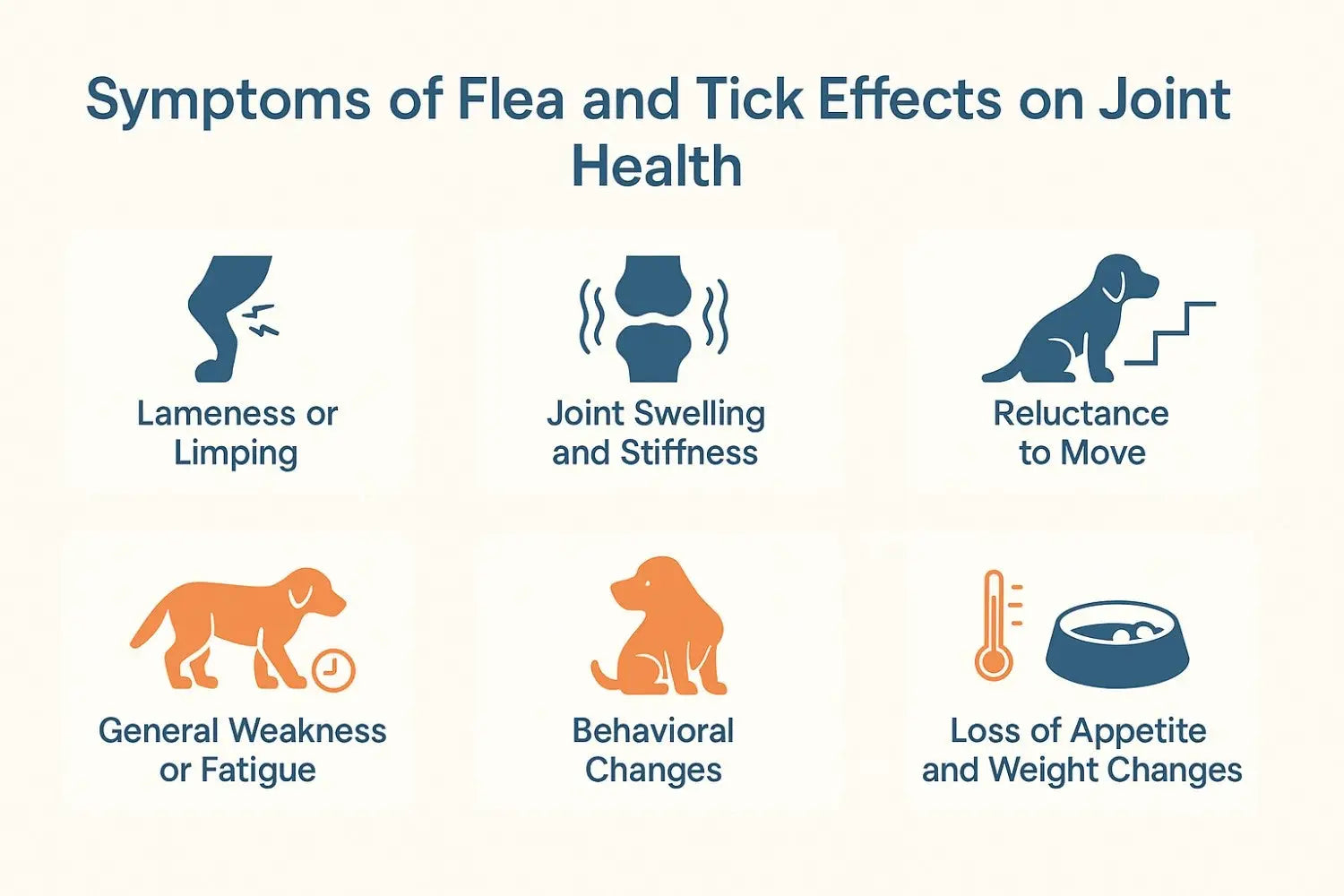
How Fleas and Ticks Affect Your Pet’s Joints
Direct Effects (Diseases That Target Joints)
-
Lyme Disease (Borrelia burgdorferi): Transmitted by ticks, it causes painful, swollen joints and shifting-leg lameness.
-
Anaplasmosis and Ehrlichiosis: Tick-borne infections that trigger joint inflammation, stiffness, fever, and lameness.
-
Bartonellosis (Bartonella spp.): Spread by fleas, ticks, and other biting insects. In dogs, it can cause polyarthritis, leading to joint pain and swelling. Cats are often silent carriers but may occasionally show lameness.
-
Rickettsial Infections (e.g., Rocky Mountain Spotted Fever): Caused by Rickettsia rickettsii from tick bites. These bacteria inflame blood vessels (vasculitis), leading to joint and muscle pain, stiffness, and arthritis-like symptoms in dogs.
Indirect Effects (From Infestations and Systemic Illness)
-
Chronic Inflammation: Flea bites and tick infestations trigger ongoing immune responses. While primarily affecting the skin, this systemic inflammation can worsen pre-existing arthritis.
-
Reduced Activity: Discomfort, fever, and weakness from parasite-borne diseases often cause pets to be less active. Over time, inactivity leads to muscle loss around joints, making stiffness and pain worse.
-
Immune System Stress: Continuous parasite exposure strains the immune system, reducing its ability to manage joint repair and control inflammation.
Protecting Your Pet’s Joints from Fleas and Ticks
Keeping your pet healthy involves a variety of preventative and supportive care products. Whether you're managing pests, joint health, or looking for natural alternatives, there’s something for every pet. Here's a quick breakdown of the best options:
1. Long‑Lasting Flea & Tick Preventatives
Fleas and ticks can result in severe health problems, but long-lasting preventatives can protect your pet:
-
Chews: Oral treatments that kill pests systemically through the bloodstream.
-
Collars: Easy, long-lasting protection that can last up to 12 months.
-
Spot-Ons: Applied to your pet’s skin, practical for up to a month.
Petcare Tip: These options help keep pests at bay and reduce disease risks.
Recommended Products for your Pets




2. Natural / Gentle Flea & Tick Solutions
For pets with sensitive skin or owners who prefer fewer chemicals, try natural solutions:
-
Herbal Spot-Ons: Plant-based oils like lavender and citronella repel pests.
-
Essential Oil Collars: Natural, chemical-free repellents for all-day defense.
-
Shampoos & Sprays: Gentle options to kill pests and soothe the skin.
Petcare Tip: Perfect for those looking for a more natural solution to pest control.

3. Joint Health Supplements
Help your aging or active pet stay comfortable with joint health supplements:
-
Glucosamine & Chondroitin: Support cartilage and joint function.
-
MSM: This powder improves joint flexibility and reduces pain.
-
Omega-3s: Reduce inflammation and support joint health.
Petcare Tip: These supplements help your pet maintain mobility and comfort, whether they’re aging or recovering from an injury.
4. All‑In‑One Preventative Care Kits
All-in-one kits offer convenience by combining multiple health solutions:
-
Parasite + Joint Support: Kits that protect against pests while supporting joint health.
-
Seasonal Kits: Address skin care, pest prevention, and joint issues in one package.
Petcare Tip: These kits simplify your routine and ensure comprehensive care for your pet.
5. Supportive Care Products
When your pet needs extra comfort, supportive care products can help:
-
Soothing Shampoos: Calm irritated skin with ingredients like oatmeal and aloe.
-
Anti-Itch Sprays & Creams: Provide quick relief from itching and bites.
-
Hot Spot Treatments: Heal inflamed skin and prevent further irritation.
Petcare Tip: Perfect for pets dealing with skin issues or discomfort.
How Joint Pain and Fleas Feed Each Other
Most pet parents think of fleas and joint pain as two separate problems. In reality, for older dogs and cats, they can trap each other in a loop that's easy to miss until it's well underway.
Here's how it works: a pet with stiff hips, sore elbows, or early arthritis can't twist, stretch, or nibble at their back, tail base, or hindquarters the way a younger, more flexible pet can. Those exact spots, like the lower back, hips, and base of the tail, happen to be where fleas prefer to settle in and feed undisturbed.
Less self-grooming means fleas linger longer, bite more, and trigger more of the itching and skin irritation that leads a pet to compensate with awkward biting, twisting, or dragging motions that put extra strain on already-sensitive joints.
-
Stiffness hinders normal self-grooming, making it easier for fleas to settle in areas that are harder to reach.
-
This leads to more biting and scratching, which puts repetitive stress on the hips, elbows, and lower spine.
-
As discomfort builds, activity tends to drop, and lower activity is a known driver of weight gain. That extra weight adds more pressure to joints already under stress, feeding the cycle further.
-
Chronic flea-driven inflammation can quietly aggravate pre-existing arthritis, even without a diagnosed flea-borne disease.
This is also why how you treat a senior or arthritic pet for fleas matters as much as whether you treat them. A pet who's sore or anxious about being handled may struggle with treatments that require parting fur near tender joints or being held still for an application. For these pets, you can opt for:
-
Extra-strength, long-lasting flea and tick collars that need to be applied just once and avoid repeated handling near sore areas.
-
Oral chews for pets who tolerate a treat more easily than a topical application.
-
Vet-guided, higher-potency preventatives for pets with heavier coats or outdoor exposure, where standard-strength options may not hold up for the full treatment window.
Why Flea-Linked Joint Pain Goes Unnoticed in Cats
Cats are fastidious groomers, which means they can lick away flea evidence, including flea dirt, bites, and even fleas themselves, long before an owner notices anything. At the same time, cats are famously good at masking pain. A cat with sore joints rarely limps dramatically; instead, you might just see them jumping onto the couch less, taking the stairs more slowly, or grooming one hip more than the others.
This matters because cats can carry Bartonella (the bacteria behind bartonellosis, also known as cat scratch disease) without showing obvious symptoms for a long time. When Bartonella does cause visible signs in cats, they can include:
-
Lameness that shifts from one leg to another, or reluctance to jump
-
Swollen lymph nodes, most noticeable around the jaw, neck, or limbs
-
A low-grade fever or a general sense that something isn't quite right
-
Joint swelling that appears occasionally and can look like ordinary age-related stiffness
Because cats hide both the flea infestation and the discomfort, flea-related joint issues in cats tend to be caught later than in dogs, often only after a vet finds swollen lymph nodes or joint tenderness during an unrelated exam.
Many strong flea and tick products made for dogs, especially those containing permethrin, are toxic to cats and should never be used on them, even in small amounts. Choosing a treatment labeled specifically for cats isn't just about effectiveness; it's a safety requirement.
-
Indoor cats aren't automatically safe. Fleas hitch rides in on other pets, clothing, or through window screens.
-
Cat-specific flea medicine (chews, topicals, or collars formulated for cats) protects against infestations without the toxicity risk of dog-formulated products.
-
Routine lymph node and joint checks during grooming or vet visits can catch what a cat's grooming habits are hiding.
Conclusion
While fleas and ticks are often considered nuisances, they can impact your pet’s overall health, including their joints. By being proactive with prevention and care, you can keep your furry friend comfortable, active, and pain-free. Regular vet visits, flea and tick protection, joint support, and a healthy lifestyle can go a long way in preserving your pet’s mobility and quality of life.
Frequently Asked Questions
Q1. How do fleas affect my pet’s joints?
Ans: Flea allergies, like Flea Allergy Dermatitis (FAD), cause pets to scratch intensely. This constant irritation can lead to joint inflammation and worsen existing joint issues like arthritis, causing further pain and discomfort.
Q2. Can ticks cause joint pain in pets?
Ans: Yes, ticks transmit Lyme disease and Ehrlichiosis, which can lead to arthritis-like symptoms such as joint pain, limping, and swelling.
Q3. What joint health supplements are best for my pet?
Ans: Supplements like glucosamine, chondroitin, MSM, and omega-3s support joint function, reduce pain, and improve flexibility. These are beneficial for aging pets or those recovering from joint injuries or surgeries.
Q4. Do dogs really need flea and tick medicine?
Ans: Yes, dogs require flea and tick medicine to prevent infestations and the transmission of serious diseases like Lyme disease and Ehrlichiosis. Regular treatment also reduces discomfort, skin damage, and the risk of anemia or other health issues.
Q5. What are the flea tick joint health side effects?
Ans: Flea and tick infestations can worsen joint health by causing constant scratching, leading to inflammation and discomfort. Tick-borne diseases like Lyme can also trigger arthritis-like symptoms, including joint pain, swelling, and stiffness, impacting mobility.
Q6. Can flea bites directly cause joint pain, or is it always through a disease?
Ans: It can go either way. A single bite won't lead to arthritis, but repeated flea bites cause chronic inflammation that can make existing joint issues worse, and infections like Bartonella that fleas carry can cause joint pain directly through polyarthritis. Most of the time, flea-related joint pain comes down to a combination of ongoing irritation, less activity, and occasionally an infection underneath it all.
Q7. Is all-natural flea and tick prevention strong enough to protect my pet's joints?
Ans: Natural, essential-oil-based options can be effective for light exposure or pets with sensitive skin, but they generally need more frequent reapplication than long-lasting chemical preventatives. For pets already dealing with joint pain, consistent protection matters more than usual, since gaps in coverage give fleas more opportunity to trigger the itch-inflammation-inactivity cycle described above.
Q8. Does my dog need an extra-strength flea treatment if they already have joint problems?
Ans: Not necessarily stronger, but often longer-lasting and easier to apply. Dogs with joint pain benefit most from preventatives that minimize handling and reapplication, such as 8- to 12-month collars or vet-recommended extra-strength options for heavy outdoor exposure, so treatment itself doesn't become another source of stress on sore joints.
Q9. Can fleas cause swollen lymph nodes in dogs, and is that connected to joint pain?
Ans: Yes. Fleas can trigger swollen lymph nodes both through general immune response to a heavy infestation and through flea-borne infections like bartonellosis, which can cause swollen lymph nodes and joint pain at the same time. If you notice both together, it's worth a vet visit rather than treating them as separate issues.
Q10. What flea medicine is safe for cats, especially older cats with joint stiffness?
Ans: Always choose a product labeled specifically for cats, never a dog flea treatment, since ingredients like permethrin are toxic to cats. For senior cats with joint stiffness, low-handling options like cat-specific topical spot-ons or oral preventatives tend to be easier to administer than treatments requiring extended restraint.
Related Articles


Recent Articles