

What Toys Do Cats Enjoy Playing With?
Atamjeet Kaur (Updated: Jun 24, 2026) 6 min read

Yes, some cats even like playing fetch with a ball!
Your cat is a stealth athlete with opinions. The right toy turns the living room into a mini safari; the wrong one becomes modern art under the couch. Let’s keep it fun, safe, and very “cat.”
For first-time cat parents or someone looking to refresh the indoor routine, this guide shows how balls, wands, puzzles, and kickers tap natural prey instincts, build confidence, and strengthen your bond. Ready to play like a pro? Let’s script the stalk-chase-catch for which your feline was born.
What Types of Cat Toys Do Most Cats Enjoy?
Imagine this: the room goes quiet, the “prey” appears, and your cat becomes a shadow. That’s why prey-mimicking toys win.
1. Wand Toys (a.k.a. Fishing Poles)
Think of the lure as a mouse with places to be. Drag it along the floor, duck it under a rug edge, freeze for a heartbeat, then dart again. When your cat finally pounces, let the lure go limp for a beat – victory matters. That little “gotcha!” tells your cat the hunt worked, and tomorrow’s game stays exciting. If you’re wondering how to choose the right cat toy for a hunting personality, start here: look for lightweight feathers or faux-fur lures that mimic small prey.

2. Ball Toys
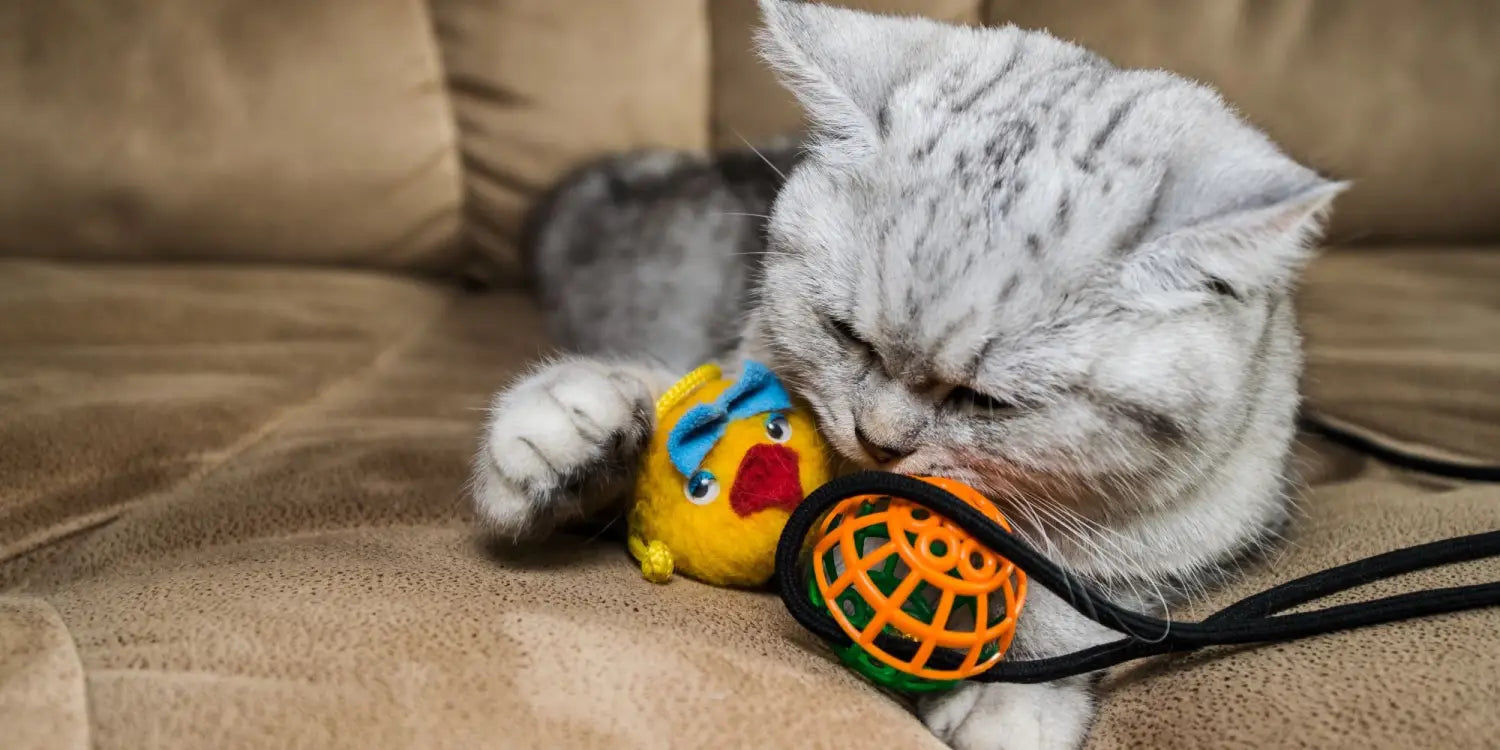
Balls are mini comets. Light ones skitter and change direction, which wakes up your cat’s chase brain. If the floor is wood or tile, you’ll see instant zoomies. On carpet, try a track toy so the ball keeps moving even when the game slows down. Many cat owners search for can a cat play with a ball and discover that track balls and ping-pong balls spark endless fun.

3. Puzzle Feeders & Foraging Mats
This is “brain play.” Your cat sniffs, bats, and figures out how to release a treat – just like foraging outdoors. It’s perfect for the best puzzle cat toys for intelligent cats, and it keeps curious minds engaged. Start easy: one or two kibbles visible through a hole, then make it trickier over time.
4. Kickers & Plush Prey
When your cat grabs and bunny-kicks, that’s predatory choreography in action. Offer a sturdy, fabric-covered kicker long enough to hug. A few rakes with the back feet, a proud head-tilt, and the universe feels right. These make excellent durable cat toys for aggressive chewers, helping even the toughest players find satisfaction.
5. Springs, Tracks, Tunnels, and Boxes
Your living room can be a tiny savannah. A tunnel becomes tall grass; a box is a blind. Toss a spring so it boings out of sight, and suddenly your cat is an ambush expert waiting for the “prey” to pass. For DIY cat toy ideas for picky cats, repurpose an old cardboard box into a multi-hole arcade, then rotate in small springs or track balls for novelty.
Why Does My Cat Have No Interest in Cat Toys?
It’s rarely “no interest.” It’s more “not that, not now, not like that.”
- Timing. Cats are crepuscular, meaning they are most active at dawn and dusk. If you’re dangling a toy at high noon, your feline roommate may send a polite “do not disturb” glance. Try the exact same toy when the light is soft; you’ll swear it’s a new cat.
- Movement. Prey doesn’t orbit a cat’s face like a ceiling fan. Make your toy shy and sneaky. Skitter along baseboards, vanish behind a table leg, pause like it’s listening, then scoot.
- Novelty. Cats are experts at “seen it.” If the clown car of toys is always on the floor, every toy turns into background noise. Keep a few stars out, stash the rest.
- Comfort and Health. If a cat that normally plays suddenly checks out, that’s data. Stress, dental pain, or a brewing tummy issue can flatten play. Pair your best tempting moves with a quick wellness check-in if the shift is abrupt.
If My Cat Doesn’t Play, Does That Mean He’s Unhappy?
Not necessarily. Some cats are poets, not sprinters.
A “quiet player” might prefer short, private victories – a single pounce behind the chair, a slow wrestle with a kicker under the coffee table, or solitary foraging at midnight. Look at the whole cat: relaxed ears, normal appetite, steady litter habits, and occasional curiosity usually mean contentment. But if play declines and you notice extra hiding, changes in sleep, or skipping meals, treat that combo like a flag and check with your vet.
How Often Should You Play with Your Cat?
Think espresso shots, not one giant latte.
Cats thrive on 3-4 short sessions a day – about five minutes each. That cadence mirrors their natural hunt: a burst, a catch, a snack, a wash, a nap. Ending with a catch (and a tiny treat) matters more than the total minutes. Variety matters, too: a wand at dusk, a foraging puzzle later, maybe a quick ball chase during your lunch break. Short, fresh, and catchable beats long, predictable, and frustrating – every time.
Recommended Products for your Pets


Are Laser Pointers Good Toys for Cats?
Yes, but with with an asterisk. Lasers are chase without catch, which can build “unfinished business.” Use the laser for the hype reel – quick zigzags, short sprints – then swap to a catchable toy (kicker, wand lure, or a tossed treat). For cats anxious about high-energy play, you might also explore quiet cat toys for apartment cats with anxiety to provide low-stress options.
What Toys Are Not Safe for Cats?
Strings, yarn, ribbons, and rubber bands look like fun noodles, but swallowed strings can cause dangerous intestinal problems. Save them for supervised wand play only and put them away afterward. Tiny balls and loose parts are choking hazards. Foil balls and brittle plastics can fragment into sharp bits. Battery toys need secure compartments. House rule: if it can thread, shred, or vanish, no solo play.
What Are Quick DIY Cat Toys That Are Actually Safe?
-
Paper Bag Cave. Clip the handles, open the bag’s mouth, and drop in a ball.
-
Cardboard Box Arcade. Punch paw-sized holes and dangle a toy.
-
Toilet-Paper Roll Puzzle. Fold the ends, poke small holes, and add treats.
First runs are always supervised; if anything starts to tear into swallowable strips, retire it.
Need the rest of your setup – litter, feeding, vet basics – in one place? Bookmark our Cat Care Guide for First-Time Cat Parents.
P.S. Your cat isn’t being “difficult.” They’re being a cat. Give them the script (stalk, chase, catch), and they’ll nail the role.
Frequently Asked Questions
Q1: What are the best interactive cat toys for energetic kittens?
Ans: For active kittens, wand toys with feathers mimic natural prey and encourage jumping and pouncing behaviors. Motion-activated toys like electronic mice provide unpredictable movement that keeps energetic felines engaged when you're busy.
Q2: Which cat toys are safe for senior cats with arthritis?
Ans: Senior cats with joint issues benefit from puzzle feeders and foraging mats that encourage gentle movement. Avoid high-jumping wand toys and choose soft kicker toys that allow comfortable side-lying play without stressing arthritic joints.
Q3: What are the best quiet cat toys for apartment cats with anxiety?
Ans: Anxious apartment cats prefer silent puzzle feeders, soft fabric kickers, and crinkle-free plush toys. Avoid battery-operated toys that make sudden noises. Paper bags with handles removed create safe, quiet hiding spots for nervous felines.
Q4: How do I choose durable cat toys for aggressive chewers?
Ans: Look for reinforced stitching and natural materials like sisal rope, and avoid toys with small parts. Fabric-covered kickers designed for rough play work well. Regularly inspect toys for damage and replace anything showing wear to prevent ingestion hazards.
Q5: What are some DIY cat toy ideas for picky cats?
Ans: Create cardboard box hideouts with paw-sized holes, toilet paper roll treat puzzles, and paper bag caves. Rotate homemade toys weekly to maintain novelty. Always supervise initial play and remove anything that tears into swallowable pieces.
Related Articles


Recent Articles