

How to Clean Your Dog’s or Cat’s Teeth at Home (No Vet Visit Required)
Atamjeet Kaur 7 min read

National Pet Dental Month is the perfect time to reset your routine—because clean teeth don’t happen by accident. Plaque builds up daily, turns into tartar, irritates the gums (gingivitis), and can progress into periodontal disease if ignored. The good news: you can clean dog teeth and clean cat teeth at home with a simple, low-stress routine that takes just a few minutes.
If you’ve been searching “how to clean dogs teeth at home” or “how to clean cats teeth”, this guide walks you through the easiest, most realistic method—plus brushless alternatives if your pet refuses a toothbrush.
TL;DR
To clean your dog’s or cat’s teeth at home:
- Use pet-safe (ideally enzymatic) toothpaste
- Brush outer teeth + gumline with a soft brush or finger brush
- Keep sessions short and reward immediately
- Add wipes, gels, water additives, and dental chews to support the routine
Want to build a complete at-home kit? Explore:
Why pet dental care matters (and why it sneaks up on you)
Most dental problems start quietly. Pets keep eating, keep playing, and still have serious plaque and tartar hiding along the gumline. That buildup can lead to inflammation, pain, bad breath (halitosis), and eventually loose teeth.
At-home oral care helps:
- Reduce plaque before it hardens into tartar
- Support healthy gums and fresher breath
- Make professional cleanings less frequent and less intense
Signs your dog or cat needs better dental care
Look for any of these:
- Bad breath that doesn’t improve
- Yellow/brown buildup on teeth (especially back molars)
- Red, puffy, or bleeding gums
- Drooling, pawing at the mouth, head-shyness
- Chewing on one side or dropping food
- Appetite or mood changes (common with cats)
If your pet shows pain, swelling, or bleeding, skip DIY and jump to the “When to call the vet” section below.
What you need to clean dog teeth and clean cat teeth at home
You don’t need a complicated setup—just the right basics.
Your simple at-home dental kit
Must-haves
- Pet-safe toothpaste (enzymatic is a big plus)
- Soft toothbrush or finger brush
- Treats for rewards (high-value for cats!)
Nice-to-have add-ons
- Dental wipes (fast “maintenance cleans”)
- Oral gel or rinse (great for brush-resistant pets)
- Water additive (helpful for cats who hate brushing)
- Dental chews/treats (supportive daily habit)
- Dental powders (sprinkle option for some pets)
A quick safety note
- Don’t use human toothpaste (not meant to be swallowed; some formulas can be harmful)
- Don’t scrape tartar at home—it’s stressful, risky, and doesn’t address what’s happening under the gumline
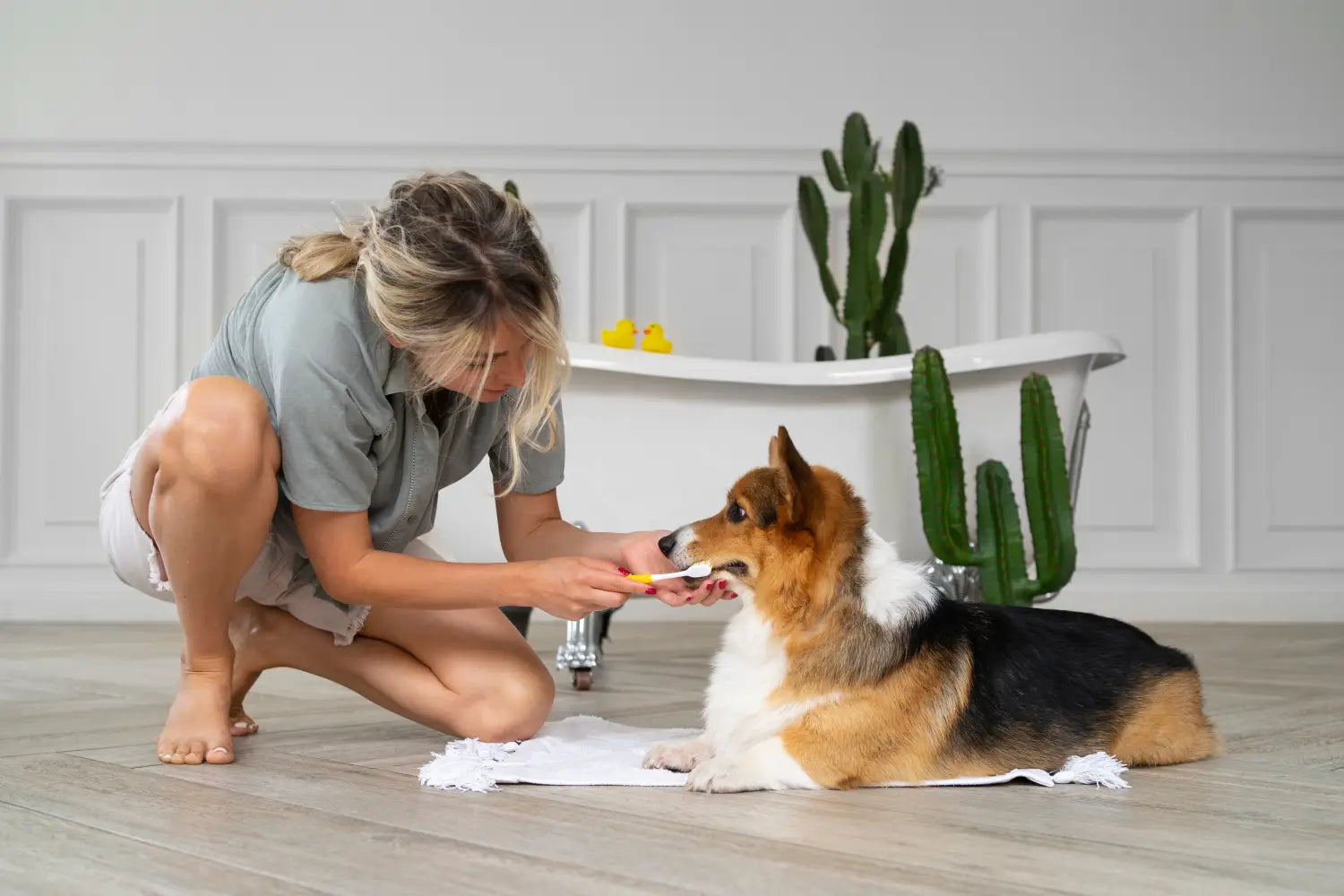
How to Clean Your Dog’s or Cat’s Teeth at Home: The 7-Step Routine
This combined method works for both species—you’ll just move slower with cats and keep sessions shorter.
Step 1: Pick a calm time (and keep it short)
Start when your pet is relaxed—after a walk, play session, or meal.
- Aim for 30–60 seconds at first
- End early if your pet gets tense (winning matters more than duration)
Step 2: Train “mouth touches” before brushing
Before a brush ever appears, build comfort.
- Lift the lip gently
- Touch the outer teeth with your finger
- Reward immediately
Cat tip: start with one side only and stop. Cats do best with tiny sessions.
Step 3: Let them taste the toothpaste
Make toothpaste a treat, not a threat.
- Put a small dab on your finger
- Let your pet lick it
- Praise + reward
Popular Picks:
- Virbac C.E.T. Enzymatic Toothpaste
- Vetoquinol Enzadent Enzymatic Poultry-Flavored Toothpaste
- Oratene Brushless Maintenance Toothpaste Gel
Step 4: Introduce the brush (soft bristles or finger brush)
Start with the easiest tool your pet accepts.
- Finger brushes feel less “scary” for many pets
- Dual-ended brushes help reach different tooth sizes
Pet Parents’ Favorite Tool:
Step 5: Brush the outer surfaces first (especially the back teeth)
This is the highest-impact part for most pets.
Focus on:
- Outer tooth surfaces (cheek side)
- Gumline where plaque hides
- Back molars (common tartar zone)
The right technique is:
- Gentle strokes, small circles
- Light pressure—think “massage,” not “scrub”
Step 6: Keep the goal realistic (progress > perfection)
Your pet does NOT need a full human-style brushing to benefit.
Try this progression:
- Day 1–3: touch lips/teeth + reward
- Day 4–7: brush 3–5 seconds per side
- Week 2+: work up to 20–30 seconds per side
Step 7: Make a schedule you’ll actually stick to
Consistency beats intensity.
- Best: daily brushing
- Good: 3–4x/week brushing + add-ons on off days
- Still helpful: wipes/gels + water additive + chews if brushing fails
Can’t brush? Brushless ways to clean pet teeth at home
Some pets will never accept brushing—and that’s okay. The fix is a layered approach.
Option A: Dental wipes (fast and low-stress)
Wipes are a great “middle ground” between brushing and doing nothing.
Best for:
- Cats who won’t tolerate brushes
- Small dogs with quick tartar buildup
- Maintenance between brushing days
HardyPaw Team’s Picks:
Option B: Oral gels, sprays, and rinses
These support plaque control, especially in hard-to-reach areas.
Dog-friendly add-ons:
- DermaZoo TrisDent Dental Oral Rinse
- DermaZoo TrisDent Dental Gel
- Adore Pet Complete Oral Care Spray (Peppermint Flavor)
Cat-friendly add-ons:
Option C: Water additives (great for cats)
If your cat refuses brushing, water additives are one of the easiest daily habits.
Also useful for:
- Multi-pet homes
- Busy routines
- Pets who tolerate “hands-off” care best
Best Picks:
- C.E.T. Aquadent Fr3sh Dental Solution Water Additive (Dogs & Cats)
- ProDen DentalCare Water Additive (Dogs & Cats)
- Vet’s Best Breath Freshener Water Additive (Dogs)
Option D: Dental chews and treats (supportive daily habit)
Dental chews and treats are one of the easiest ways to support daily oral hygiene—especially for pets who won’t sit still for brushing. The chewing action helps reduce soft plaque buildup by gently scraping tooth surfaces, and many formulas are designed to support fresher breath and healthier gums over time. They’re also a great “reward” tool: you can finish brushing (or wipes/gel) with a chew to end the routine on a positive note.
Top Picks for Dogs:
- Dr. Marty Better Life Chews Dental Care Sticks
- ORAVET Dental Hygiene Chews for Large Dogs
- Purina Pro Veterinary Diets Dental Dog Treats
Top Picks for Cats:
- ProDen DentalCare Dental Bites (Veggie Flavor)
- 1-TDC Periodontal & Joint Health Softgels
- ProDen DentalCare Powder for Cats
Squeaky Clean Smile, Guaranteed!
Cleaning your dog’s or cat’s teeth at home doesn’t have to be complicated—it just has to be consistent. Start small, focus on the outer teeth and gumline, and build a routine your pet can tolerate. If brushing isn’t realistic, lean on brushless helpers like wipes, gels, water additives, and dental chews to reduce plaque and support fresher breath. The best routine is the one you’ll actually keep—so pick your “lane,” stock your at-home kit, and make dental care a quick daily habit your pet can live with.
FAQs
Q: How often should I brush my dog’s teeth?
A: Daily is best for removing plaque before it hardens into tartar. If you’re starting from zero, aim for 3–4 times per week and build up.
Q: How often should I brush my cat’s teeth?
A: Daily brushing is ideal, but many cats need a slower ramp-up. Start with a few seconds, 2–3 times weekly, then increase as your cat tolerates it.
Q: What toothpaste is safe for dogs and cats?
A: Use pet-specific, swallow-safe toothpaste—preferably enzymatic. Avoid human toothpaste (and anything with xylitol). Flavored pet formulas help acceptance, and enzymes support plaque control between brushes.
Q: My pet won’t tolerate brushing—what can I do?
A: Use a layered routine: dental wipes or brushless gel for quick contact cleaning, plus a water additive and dental treats/chews. It’s not perfect, but it’s consistent.
Q: Are dental chews enough to clean my dog's teeth?
A: Chews help scrape plaque and freshen breath, especially on back teeth, but they don’t replace brushing along the gumline. Use chews as a daily add-on, not the whole plan.
Q: Can I use baking soda, coconut oil, or human mouthwash?
A: Skip DIY pastes and human rinses—many aren’t swallow-safe and can upset digestion. Stick with veterinary-formulated products designed for pets’ mouths, gentle gums, and daily use.
Q: How do I clean my cat's teeth at home if my cat bites or fights?
A: Keep sessions under 10 seconds, focus on outer teeth only, and use a finger brush or wipe. Pair with lickable rewards. Add water additives or gels on hard days.
Q: What signs mean I should see the vet anyway?
A: Bleeding gums, facial swelling, loose or broken teeth, heavy tartar, drooling, pawing at the mouth, or sudden appetite changes can signal pain or infection—book a dental exam.
Q: How fast will I notice results from home dental care?
A: Breath often improves within 1–2 weeks of consistent cleaning. Visible tartar won’t disappear overnight, but plaque builds more slowly, gums look calmer, and new buildup softens.
Related Articles


Recent Articles